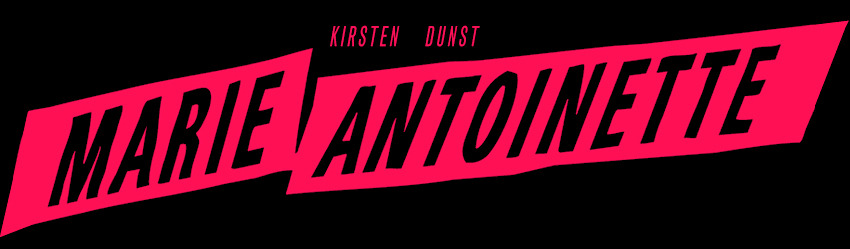
If her take on Marie Antoinette is any clue, Sofia Coppola loves postpunk ’80s British bands like Siouxsie and the Banshees, the Cure, New Order, and New Romantic frontrunners Adam and the Ants and Bow Wow Wow. So do I. This in all likelihood is what drew me to Marie Antoinette: with three Bow Wow Wow songs (two remixed by My Bloody Valentine’s Kevin Shields), big hair, and a real MTV sensibility, its appeal to me is, well, a piece of cake.
All that is only part of the story. What really makes me love Marie Antionette is the sympathetic angle Coppola takes with this infamous character. Based on Antonia Fraser’s biography Marie Antoinette: The Journey, the first half of the movie is about the difficulties Marie (Kirsten Dunst) faces adapting to her new French surroundings and getting her new husband, Louis XVI (Jason Schwartzman, Coppola’s cousin), to consummate their marriage. She fails, and of course everyone blames her—even her mother (Marianne Faithfull). When she’s had enough, she says “fuck it” and becomes a full on rock star. This is where things get interesting.
Colorful and elaborate, Marie Antionette is not profound. So what? Lance Acord’s music video cinematography is perfect for what Coppola is going for; bordering on sensory overload, this film is busy, clever, and fun to watch. I know better than to take it as a history lesson.
With Judy Davis, Rip Torn, Rose Byrne, Asia Argento, Molly Shannon, Shirley Henderson, Danny Huston, Mary Nighy, Jamie Dornan, Steve Coogan, Tom Hardy
Production: Pricel, Tohokushinsha Film Corporation (TFC), American Zoetrope, Pathé, Commission du Film France, Commission du Film Île-de-France
“All the best people have bad chests and bone diseases. It’s all frightfully romantic!”
—Juliet Hulme
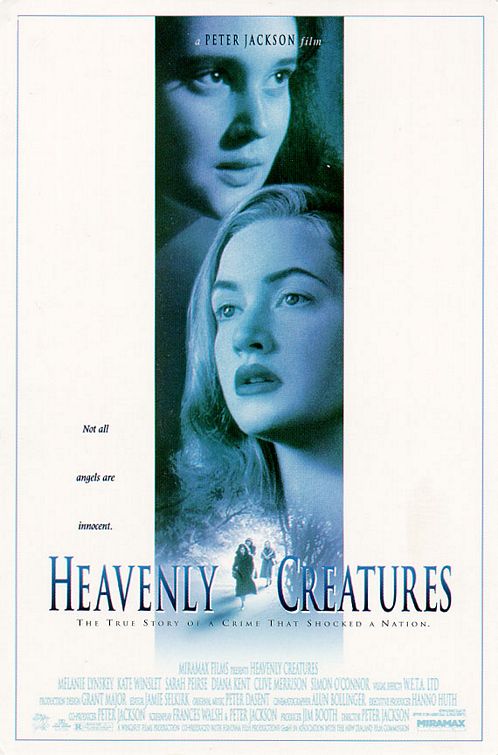
Forget Lord of the Rings—Heavenly Creatures is Peter Jackson’s coolest film. Before big budget Hollywood blockbuster fantasy franchises, the New Zealand filmmaker wrote, produced, and directed offbeat small-scale gore and porn comedies like Bad Taste (1987), Meet the Feebles (1989), and Dead Alive (1993). I’d already seen that last one by the time Heavenly Creatures came out for a limited run (in the States, anyway) in the fall of 1994. I assumed it would be another messy splatterfest—described to me as a “lesbian murder flick,” what would you think? Turns out, that’s not quite what it is.
Far more than a “lesbian murder flick” or even a brilliant stepping stone to bigger and better things, Heavenly Creatures represents a turning point in Jackson’s career. It’s a rare example of flawless execution across the board. He brings together every element—narrative, character development, casting, visuals, special effects, dialogue, period costumes and sets—to create a real humdinger.
Christchurch, New Zealand, 1952: 14-year-old Yvonne Reiper (Melanie Lynskey), who goes by “Pauline,” is a messy-haired, brooding loner at an all-girl high school. In her first scene, she’s wearing a big scowl on her face at an assembly, not singing along with the rest of her classmates—not until the school’s headmaster (Darien Takle) catches her gaze and snaps her into line with a widening of her eyes. Pauline’s father (Simon O’Connor) manages a grocery market and her mother (Sarah Pierse) runs a room and board for college students out of their home.
WARNING: Potential spoilers ahead!
A new student is introduced during French class: Juliet Hulme (Kate Winslet), the privileged daughter of a reknown college professor (Clive Merrison) and a psychologist (Diana Kent). Juliet, who proclaims she’s “actually from England” and chooses the French name “Antoinette,” captures Pauline’s attention when she insults the teacher, Miss Waller (Elizabeth Moody), unleashing a hilarious hissy fit. The scene is, in a word, awesome to watch play out. Right after that, their art teacher, Mrs. Collins (Liz Mullane), pairs the girls for an assignment that Julia disregards; instead, she draws dragon-slaying St. George, depicting him in the likeness of Mario Lanza, “the world’s greatest tenor!” She doesn’t get around to drawing Pauline, her model. Mrs. Collins isn’t impressed, but Pauline is.
Thus begins the girls’ friendship. They bond over their similar pasts involving childhood disease and extended hospital stays, a penchant for drama, and a mutual distaste for their peers (and perhaps social issues that leave a void). Juliet is mischievous and romantic, which softens Pauline and gets her to open up. Sitting out gym, they giggle over sexy WWII pulp novels. They bike through the woods and strip to their underwear, dancing and singing. They hug a bum (played by Jackson himself) on the street. They hold weird rituals for celebrities they like. They make Plasticine models, write stories, and devise an elaborate royal family tree, building around themselves a fantasy medievalesque kingdom called Borovnia where all its inhabitants worship them. Their imaginary world blurs the bounds of reality as their friendship intensifies.
A string of troubles arises that threatens to separate Pauline and Juliet: tuberculosis, an extramarital affair, a divorce, South Africa, and a medical diagnosis of incurable homosexuality. The girls decide to run away to America, but they can’t secure a passport for Pauline. They devise another scheme to stay together, but it’s a risky one: kill Pauline’s mother.
Heavenly Creatures starts out sweet—it’s something of a typical teen movie at first—but it does a complete turnaround. Based on actual events, Jackson wrote the screenplay with Frances Walsh; the real story is sad but compelling, and the script is tight. The casting—married couple John and Ros Hubbard and the aforementioned Mullane—is genius: every single actor is terrific in his or her part, even the minor ones, and it makes Heavenly Creatures all the richer. Many of them turn up in Jackson’s later projects.
Lynskey and Winslet own their characters; I can’t imagine anyone else in their roles. They’re charming, silly, histrionic, desperate, deranged, and ultimately “stark raving mad”—and they portray all of it exceptionally well. They manage to keep the homosexual subtext from getting out of hand. You can tell from Winslet’s first scene—she walks in with that crazy look on her face—that she’s destined for more. She became a star after Heavenly Creatures in a way that Lynskey didn’t, but both are mesmerizing.
The scenes in Borovnia and the Fourth World are nothing short of spectacular. Actually, many of the visuals here are burned into my memory. Alun Bollinger’s camerawork and bleached palette lends a lovely dreamlike quality. Once things start to unravel for these “nice” girls, the whole thing shifts to a darker, more sinister tone. It’s an emotional downward spiral to the end—those splatter films serve Jackson well.
Heavenly Creatures hasn’t lost its luster after nearly 25 years. I lost track of how many times I’ve seen it, yet it continues to suck me in every single time. It’s one of my favorites.
With Gilbert Goldie, Jed Brophy, Peter Elliott, Kirsti Ferry, Ben Skjellerup, Jean Guérin, Stephen Reilly, Jessica Bradley, Alex Shirtcliffe-Scott
Production: WingNut Films, New Zealand Film Commission
“I don’t know how I’m gonna live with myself if I don’t stay true to what I believe.”
—Desmond Doss
Like him or not, Mel Gibson has what it takes to direct a massive Hollywood picture. Hacksaw Ridge, his first directorial job in a decade, demonstrates that much—just in case earlier films like Braveheart, The Passion of the Christ, and Apocalypto didn’t.
Hacksaw Ridge depicts the remarkable and true story of Desmond Doss (Andrew Garfield), the Lynchburg, Virginia, Seventh-day Adventist who served as a medic in the U.S. Army during World War II. His story is unique: he enlisted, but as a conscientous objector for religious reasons. Refusing to kill or carry a gun, he rescued 75 or so wounded soldiers from the field during the Battle of Okinawa (http://www.collegedale-americanlegion.org/Pages/DesmondTDoss.aspx). President Harry S. Truman awarded Doss the Congressional Medal of Honor in 1945, the first time such a high accolade was bestowed upon someone who never even discharged a weapon (https://en.wikipedia.org/wiki/Desmond_Doss).
From a technical standpoint, Hacksaw Ridge is pretty awesome. The story is a good one. The battle scenes are clearly the centerpiece: they’re loud and extremely graphic. The prosthetics are spot on realistic. Cinematographer Simon Duggan starts out with warm, almost sepia tones in the early civilian scenes, but as the setting moves onto the battlefield he ditches color in favor of a washed out black, green, and white palette. Shaky closeups, slow motion shots, blurry pans, and quick cuts create a sense of confusion as gunfire and explosions and human carnage take over the screen. Hacksaw Ridge is no Son of Saul (https://moviebloke.com/2016/02/11/son-of-saul-saul-fia/), but it still overwhelms the senses albeit in a distanced, staged blockbuster way.
Otherwise, Hacksaw Ridge didn’t impress me all that much. At its core, it’s a standard-issue war movie complete with a sugary subplot about the girl, Dorothy Schutte (Teresa Palmer), waiting for Doss to hurry up and get back home so they can get married, and lots of humorous if mawkish male bonding through nicknames, insults, physical attacks, and simply having each other’s back. There’s a military court scene, trite “war is hell, boys” lines, soldiers who freak out once they get on the battlefield, likable characters who perish, and of course the superhuman heroic deeds of Doss.
Most character background is given hurried and superficial treatment: Doss’s alcoholic veteran father (Hugo Weaving) and his bad experience in World War I, Doss and Dorothy’s quick courtship, even the failed attempts of Sgt. Howell (Vince Vaughn) and Cpt. Glover (Sam Worthington) to persuade Doss to leave the Army. Too bad, because a little more insight could have made the film stronger. A particularly glaring example is brother Hal (Nathaniel Buzolic), who simply vanishes once he shows up at the dinner table in uniform. What happens to him? Did I miss it?
I’m conflcited on the message here, but I guess that’s okay because frankly Hacksaw Ridge is a conflicted film. Gibson maintains that it’s an anti-war statement (http://www.christianpost.com/news/mel-gibson-hacksaw-ridge-is-an-anti-war-movie-170318/). Fine, but that’s hard to believe considering the disproportionate amount of time and resources given to overblown battle scenes. I’m not sure the film honors Doss or his pacifist convictions. Moreover, what sure seems like a blatant parallel to the so-called religious liberty movement is, in my view, misguided and hollow, especially when Doss’s faith is treated more or less as incidental. Hacksaw Ridge sustained my interest, but I would have appreciated a little more depth.
With Luke Bracey, Darcy Bryce, Rachel Griffiths, Firass Dirani, Michael Sheasby, Luke Pegler, Nico Cortez, Goran D. Kleut, Harry Greenwood, Damien Thomlinson, Ben O’Toole
“The taste of it on your tongue, the feel of it on your fingers—it’s like a drug.”
—Mike Acosta
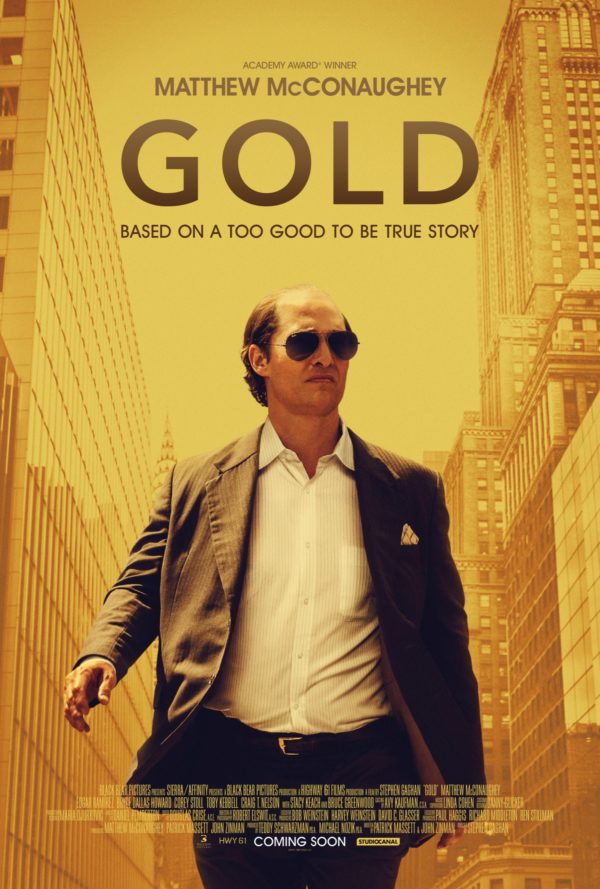
Not everything gold glitters; such is the case with Stephen Gaghan’s Gold, his first film since the acclaimed Syriana over a decade ago. Matthew McConaughey is Kenny Wells, a redneck businessman running his collapsing mining company from a smoke-filled tavern in Reno, Nevada, in 1988. Acting on little more than gut and some pawn shop cash from hocking gifts he gave his girlfriend (Bryce Dallas Howard) in better days shown as the movie opens, he abruptly heads to Indonesia to track down geologist Mike Acosta (Édgar Ramírez) to find a gold mine.
Their first meeting doesn’t go well at all. Looking like he stepped out of Banana Republic when it was a safari store in the ’80s, Acosta is shrewd, rugged, and quite experienced. Balding and sweaty Wells, with his jagged teeth and paunch, is sloppy and desperate. He reads as broke. Unimpressed, Acosta passes when Wells suggests they partner up—until the latter raises $200,000 for the proposed venture. After a series of miscalculations and mishaps (including a bout with malaria), they hit the jackpot in the middle of a jungle. Suddenly, the same banks and big investors that turned up their nose at Wells before want in on the action.
Gold isn’t a bad movie, but it’s not the impressive work it wants to be. The pace is fine, but the plot twists are unsurprising if not downright predictable. The problem is that I’ve seen this story before, and recently: mainstream films like The Big Short (https://moviebloke.wordpress.com/2016/01/03/the-big-short/), The Wolf of Wall Street, and American Hustle deal with the same themes in a similar manner. I’ve seen McConaughey be the same character, too. The curious statement “inspired by a true story” after the opening credits is the cue to something I found disappointing: Gold is a fictionalized account of a true story, changed enough that I guess it can’t claim to be “based on” reality. I’m not sure where that line is drawn, but it turns out much of the story is made up (http://www.financialpost.com/m/search/blog.html?b=business.financialpost.com/news/mining/gold-the-movie-about-the-bre-x-mining-scandal-that-isnt-about-bre-x&q=Bre). Plus, it’s never a good sign when the music in a film—here, artists ranging from Orange Juice to New Order and Joy Division to the Pixies and a new song by Iggy Pop and Danger Mouse—elicits the most enthusiastic response from me. Overall, meh.
Also starring Corey Stoll, Toby Kebbell, Craig T. Nelson, Stacy Keach, Rachael Taylor, Joshua Harto, and Timothy Simons
Produced by Boies/Schiller Films, Black Bear Pictures, and Highway 61 Films
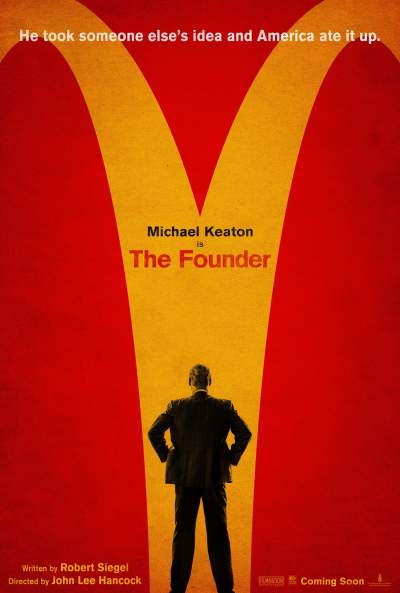
Ray Kroc’s name is synonymous with McDonald’s, the ubiquitous fast food institution that hasn’t needed an introduction for the entire time I’ve been alive. It seems strange that I’ve never known much about him even after living in Chicago for almost 20 years—at least, not until The Founder. Then again, maybe I still don’t.
Kroc (Michael Keaton) is a middle aged traveling salesman who hocks milkshake mixers to restaurants, mainly drive-ins and diners, in the 1950s. Based in Chicago, he has a nice enough home in suburban Arlington Heights, a supportive if not ambitious wife, Ethel (Laura Dern), and the means to afford a country club membership. Nonetheless, Kroc is neither wildly successful nor affluent. He isn’t setting the world on fire selling milkshake mixers, and his business ideas never seem to pan out. He doesn’t fit in with the WASPy professionals Ethel gravitates toward. Being the entrepreneur he is, he yearns for more.
While making cold calls in Missouri, Kroc gets a big order for mixers from San Bernardino, California. He drives out there and finds McDonald’s, an idyllic burger joint owned and operated by two brothers, affable Mac (John Carroll Lynch) and crusty Dick (Nick Offerman). Shiny and clean, the place is a welcoming sight. Mac shows Kroc the kitchen: it’s an intricate and super-efficient assembly line that delivers consistenly appetizing product in minutes. Disposable packaging means customers can take their food with them and eat it wherever they want, keeping the line moving while eliminating the need for clean up (not to mention dishes). Employees work together as a team. The customer service is flawlessly friendly. Dick explains that high-quality food and fast service are the hallmarks of McDonald’s. The brothers have hit something with their formula: the place is slammed with a customer base that overwhelmingly consists of middle class families. Kroc wants to franchise McDonald’s, something the brothers tried before but it didn’t work.
The Founder focuses less on Kroc’s personal life and more on the many problems he overcomes in executing his ambitious plan to make McDonald’s and its Golden Arches a symbol of America that seemlessly fits, as he puts it at one point, right in with the Stars and Stripes and crosses on churches. There’s a lot of dry stuff dealing with the nuts and bolts of business here—business models, contract negotiations, marketing, quality control, real estate, financing, trademarks, cutting costs, and of course double crossing. It’s a timely film—I can’t think of a more fitting movie to see on this particular Inauguration Day: one of the promotional posters for The Founder calls Kroc a rule breaker, a risk taker, and a game changer, and for better or worse that’s what he turned out to be. Michael Keaton is perfect for this role, playing Kroc as a ruthlessly driven goofball who has no good ideas of his own but certainly knows how to capitalize on those of others. American history is rich in such characters.
That said, I must admit that I have no idea how much of this story is accurate—not that I was compelled to find out on my own. The Founder doesn’t make me care. Pieces of the story seem to be missing. Robert Siegel’s script isn’t exactly objective—it borders on propaganda, especially when he overemphasizes the simplicity of the McDonald brothers. John Lee Hancock is a capable director, but he’s so ambiguous about his subject that he doesn’t say what he makes of him. I’m not sure he knows. His treatment lacks a certain nuance the material demands that could’ve made The Founder a lot more than it is. It’s not a terrible film, but I had higher expectations.
Also starring B.J. Novak, Linda Cardellini, Patrick Wilson, Justin Randell Brooke
Produced by FilmNation Entertainment, The Combine, Faliro House Productions S.A.
I was a little kid in the Seventies, but I have many indelibly vivid memories of the decade: huge cars, gas lines, expensive meat, hijacked planes, Sanka and Sweet’N Low, smoking everywhere, hard rock, punk rock, disco, macrame, spider plants, the Bicentennial, Sky Lab, Victoriana (we had Mucha posters in our mustard-colored kitchen), that strange Holly Hobby aesthetic. It seems like it all changed immediately when Reagan took office in 1981.
20th Century Women captures a slice of American life on that unique, unremembered and largely disowned cusp. Set as a flashback to 1979 with voiceovers that repeatedly remind us that we’re looking backward, the film is a rather remarkable time capsule. The story is simple: Dorothea (Annette Bening) is my grandparents’ age (born in 1924). She had her only son, Jamie (Lucas Jade Zumann), late in life—i.e., over age 40. She’s been divorecd for a few years, which was fine until Jamie hit puberty. Now, she needs help understanding him. She enlists his two closest allies—Julie (Elle Fanning), whose pants he wants to get into, and Abbie (Greta Gerwig), a postpunk fuckup—to help her figure him out.
Loosely based on actual events from director and writer Mike Mills’s childhood, 20th Century Women is fun to watch. Growing up in a house of females myself, I relate to a lot of his experiences. I loved all the Talking Heads, too. Oh!—and Siouxsie and the Banshees! That said, this film borders on overbearing with its nostalgia. It could’ve been so much better—the material and the talent are both there, but Mills goes for easy returns that don’t pay off. The story falls flat. Perhaps a quote from Bening in an earlier film, the superior and far more interesting Running with Scissors, succinctly sums up my problem here: “It’s shit, Fern. It’s sentimental. It’s emotionally dishonest. It implodes into nothingness.”
I wasn’t bored, and I didn’t hate 20th Century Women. But I’m never going to see this movie again. Too bad, because the acting is great. It’s a misfire due to its execution. It seemed like a good idea at the time.
Also starring Billy Crudup, Vitaly Andrew LeBeau, Curran Walters, Toni Christopher, Jimmy Carter (public domain footage)
Produced by Annapurna Pictures, Archer Gray, and Modern People
“People can say I can’t sing, but they can’t say I didn’t sing.”
—Florence Foster Jenkins
A lot of hype surrounded Florence Foster Jenkins before it arrived at a theater near us last fall. We wanted to catch it during its original run, but it came and went before we got around to seeing it. So, inspired by a post earlier in the day, I rented it on a Friday when we had no plans other than dinner at home. The night we watched it just happened to be Friday the 13th, which somehow seems appropriate.
Based on actual events and set during WWII, Florence (Meryl Streep) is a rich Manhattan society lady of a certain age who runs in an arty circle and knows a lot of people, some with money and others who follow it. She operates a private venue dedicated to opera, the Verdi Club, where she stars in a show and has a non-speaking role. Dying of either syphillis or the treatment for it—mercury and arsenic!—her one wish is to perform for an audience at Carnegie Hall. The problem is, she can’t sing; she’s downright awful. Her entrance here, lowered onstage from a rope and pulley while dressed as an angel with a harp, reminds me of Sarah Jessica Parker’s entrance (“I offer you mortals the bird of peace so that you may change your ways and end this destruction”) in Ed Wood, Tim Burton’s 1994 biopic about a similarly talentless film director who came along a decade or so later. The comparison is so apt that I wonder if it was intentional. Here, Florence’s husband, St. Clair Bayfield (Hugh Grant), doesn’t help matters by exaggerating her talent.
Determined to make her dream come true, Florence hires a vocal trainer, Carlo Edwards (David Haig), and a pianist, Cosmé McMoon (Simon Helberg), to put together a show. Established and well-known Carlo is content to take Florence’s money, build her ego, and let her dream on. Budding Cosmé, however, struggles with lying to her about her obvious ineptitude, not to mention her negative impact on his professional reputation. He soon sees that those around Florence stretch the truth about a lot of things when dealing with her.
Nicholas Martin’s script is kind to its characters, going for laughs in a way that doesn’t demean any of them. I never heard of her until this film, but the actual Florence Foster Jenkins was an interesting person. Her singing truly was awful: https://www.youtube.com/watch?v=Hcs9yJjVecs. As always, Streep is spot on with her portrayal. She seems to have fun in this role, and it shows. Grant, who usually bores me but doesn’t here, is well suited for St. Clair: he’s stuffy and straight, but he nicely coveys an underlying deceitfulness that doesn’t come off as sinister. I like the way director Stephen Frears plays with deceit here, ultimately using it to depict a very touching side of St. Clair—who lives with his mistress (Rebecca Ferguson) in Brooklyn in apartment that Florence pays for. Much to my surprise, though, Big Bang Theory‘s Helberg steals practically every scene he’s in: keeping it subtle with Cosmé’s homosexuality (as Cosmé himself no doubt would have done during his day), he plays his character as a spineless, perennially uncomfortable, asexual bundle of nerves. He peppers his performance with grimaces and nervous giggles. Later, he delivers a line to explain his tardiness to Florence (of course, it involves sailors) with perfect and priceless dryness. He outshines everyone here.
Florence Foster Jenkins has some funny moments and some very touching ones. I found it enjoyable enough, but certainly not a knockout. It could have benefitted from a little more quirk and edge, especially considering its title character who showed no shortage of either.
Also starring Nina Arianda, Stanley Townsend, Allan Corduner, John Sessions, John Kavanagh, David Menkin, and Sid Phoenix
Produced by Qwerty Films, Pathé Pictures International, and BBC Films
Houston, do you read me: NASA employed black people in its infancy during the early Sixties. What’s more, NASA’s first major project, Mercury, probably wouldn’t have gotten off the ground without three black female “computers,” or mathematicians, whose efforts literally put John Glenn and Friendship 7 into orbit. The result was a serious boost in American morale during the race against the Soviets into space and a boon to the Space Program under President Kennedy. So, with its historically significant and truly enlightening subject matter, what most caught me off guard about Hidden Figures is its tone, which is light, upbeat, cute, and often comical. While not in itself a bad thing, it’s not what I expected.
Unfortunately, that’s about all Hidden Figures offers that I didn’t expect. I’m not saying I didn’t enjoy this film; I did. It’s a great story about remarkable people who actually lived. According to one subject, their real stories are not far off from this film (http://www.latimes.com/science/sciencenow/la-sci-sn-hidden-figures-katherine-johnson-20170109-story.html). Taraji P. Henson plays Katherine Johnson, a recently widowed math whiz who works for NASA in Virginia, as a bookish nerd complete with glasses that keep sliding down her nose. She and her coworkers, smart and sassy Dorothy Vaughan (Octavia Spencer) and fiery and coquettish Mary Jackson (Janelle Monáe), quietly but forcefully demonstate their worth in an environment that doesn’t treat them as equals. While Katherine lugs binders and a calculator back and forth between her desk and the “colored” rest room clear across campus to figure out arcs and other shit I sure can’t, Dorothy teaches herself how to operate the new IBM that not even IBM technicians can set up correctly and Mary pushes her way into engineering classes at night in an all white, all male school. Director Theodore Melfi does a really nice job demonstrating institutionalized racism and sexism through characters who may not have anything against black people or women—as administrator Vivian Michael (Kristen Dunst) curtly tells Dorothy in one scene and unwilling research partner, Paul Stafford (Jim Parsons), makes clear to Katherine in another scene by redacting her name from a joint report they both wrote—but don’t recognize the issue.
Despite its merits, I found Hidden Figures to be slightly more sophisticated than a Lifetime movie. Melfi, who with Allison Schroeder adapted the screenplay from Margot Lee Shetterly’s book of the same name, takes a pretty basic approach to the material. It’s so easy—obvious, even—to gage where the story is headed. John Glenn (Glen Powell) sings Katherine’s praises while a love interest develops for her in handsome Col. Jim (Mahershala Ali). So cute. Hidden Figures gets into civil rights issues, but only on a superficial level. There are a few overdone Oscar grabs, like a scene between Katherine and her boss, Al Harrison (Kevin Costner), that ends with him smashing the sign outside the “colored” ladies’ rest room, but no true show stoppers. Frankly, though, most of the actors here have appeared in better movies. Too bad, because this could’ve been a great film instead of just an okay one. Hidden Figures doesn’t quite do its trailblazing subjects justice.
Like any kid, five-year-old Saroo (Sunny Pawar) is enamored of his older brother, Guddu (Abhishek Bharate). Saroo shadows Guddu everywhere, helping him do things like steal coal from trains to trade for milk for their penurious mother (Priyanka Bose) and little sister (Khushi Solanki) in their tiny village in India. After begging his brother to take him to “work” with him in a nearby city one night, both boys quickly learn that Saroo is too young to hack the late shift. Guddu leaves Saroo on a bench at a train station, promising to be right back. Saroo dozes off, waking up on an empty platform in the middle of the night. Scared and maybe cold, he gets on a vacant train and drifts back to sleep in one of the compartments. He’s jolted up while the train is speeding through terrain he’s never seen before.
The train takes Saroo to Kolkata (formerly Calcutta), where he must fend for himself. He doesn’t know the city, the language, or even his mother’s name. Kolkata is dangerous for a kid: Saroo is nearly abducted at the train station. He meets Noor (Tannishtha Chatterjee), a seemingly nice lady who takes him in. Saroo senses that her creepy friend Rawa (Nawazuddin Siddiqui) has nefarious plans for him, so he bails. A man (Riddhi Sen) eating in a café takes Saroo to the police, who turn him over to an orphanage. They try to find Saroo’s mother, but he’s unable to provide any useful information. Mrs. Sood (Deepti Naval) teaches him English and manners. An Australian couple, John (David Wenham) and Sue Brierley (Nicole Kidman), adopt him.
To use a line from the Beastie Boys, you think this story’s over but it’s ready to begin. Cut to 2008: Saroo (Dev Patel) is grown up, Westernized, and starting school for hospitality management. During introductions, he tells his classmates that he’s from Calcutta but that’s about all he knows. While attending a friend’s party, he goes to the kitchen to get a beer and sees a plate of jalebi, an orange deep-fried Indian pastry. It triggers his memory, and he becomes obsessed with finding his “real” family.
Adapted from Saroo Brierley’s memoir A Long Way Home, Lion plays out as two movies: one about young Saroo, and the other about adult Saroo. On an emotional level, Lion is a beautiful and powerful accomplishment—I defy anyone not to feel something from this film, which deals with identity, family, and home. Even so, it’s flawed. First-time feature director Garth Davis is really heavy-handed with the tears, so much that Lion comes off as trying too hard—manipulative, even. Davis connects the two stories, but he treats them vastly differently. The pace of young Saroo’s story is far superior: it flows naturally, unlike adult Saroo’s, which is choppy and abrupt. Young Saroo’s story is insightful and lyrical, while adult Saroo’s is too often inelegant. I found the unevenness distracting. Plus, the apparitions of Guddu and Saroo’s mother in Australia got silly after awhile. It shouldn’t be difficult to tell from the first three paragraphs of this entry which story I found more engaging.
Even with its flaws, Lion is still a good movie—well worth the two hours it eats of your life. The acting all around is superb, though Lucy (Rooney Mara) is a bit superfluous. Patel is great, but Pawar is the star here; it’s hard to believe this is his first film. Sia’s “Never Give Up,” which plays over the closing credits, will get stuck in your head for days.
Jacqueline Bouvier Kennedy: her name conjures up specific images—pink Chanel, a pillbox hat, pearls, big sunglasses, all illuminated by her unshakable poise. Jackie, the new biopic by Peruvian director Pablo Larraín, portrays the iconic former First Lady in a light I didn’t quite expect: strategic. While it certainly isn’t flattering, it doesn’t come off as negative, either.
Taking place over the days following the assassination of J.F.K. (Caspar Phillipson), Jackie is essentially a character study that follows Mrs. Kennedy (Natalie Portman) as she steadies and readies herself for both her husband’s funeral and the changes that lie ahead for her and her children (Sunnie Pelant, Aiden and Brody Weinberg). In the midst of her grief, she carefully and with an earnest sense of purpose culls various elements to assemble her husband’s legacy—which she begins with Abraham Lincoln’s funeral procession.
From a technical standpoint, Jackie is impressive. Stéphane Fontaine’s cinematography is lovely, using a pallet of drab, saturated tones that calls to mind Kodak snapshots from the time period to create a somber look that reads clearly as November. He offsets this visual effect nicely with splashes of vivid reds. If nothing else, Jackie is a pretty movie. Structured with split time sequences that go backward and forward, the attention to detail is excellent: the film does a great job reproducing not just the White House and Mrs. Kennedy’s 1962 televised tour of it, but the early ’60s generally. Portman plays her part capably; she’s convincing as Mrs. Kennedy despite her annoying tendency to overdo the drama.
That’s about it for the positive. For all the pains Jackie takes to look and play out perfect, it gets a lot wrong. Those New England accents aren’t quite right, and none of the actors seem able to stick with them. Peter Sarsgaard is epically miscast as Bobby Kennedy, whom he doesn’t even try to emulate. I didn’t realize who he is until well into the film. It’s no secret that Mrs. Kennedy smoked, but popping pills and drinking as she gets dressed in the morning? And telling a priest (John Hurt) that she should’ve been a shop girl or a stenographer? I doubt it. The graphic scene of J.F.K.’s assassination, stuck in somewhere past the middle of the film well after a harrowing and far more effective scene of Mrs. Kennedy staring into a mirror and wiping blood off her face, is completely unnecessary; it comes off as a crude way to shock the audience—I jumped in my seat when I saw it, but not in a good way. The sloppy appearance and condescendingly bored demeanor of the reporter (Billy Crudup) is bizarre; sitting there in his Oxford with his tie undone as he interviews Mrs. Kennedy, I couldn’t help but wonder if in reality she would’ve opened up to him let alone allowed him into her home. He may be handsome, but his entire presence bummed me out.
The “psychological portrait” approach is mildly interesting for a little while, but the intrigue wears off. Jackie is nothing insightful, groundbreaking, or thought provoking. It could have been far more compelling considering its subject—this is total Oscar fodder, but it’s done so dully. I hope Larraín’s other new biopic, Neruda, is better.






 moviebloke