Maurice

(UK 1987)

“England has always been disinclined to accept human nature.”

— Lasker-Jones

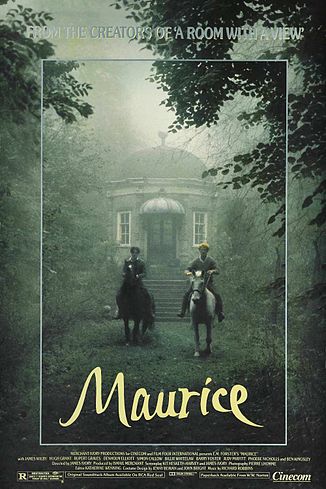
I’m not usually a fan of period pieces, especially those set in Victorian or Edwardian England. Somehow, they tend to be stuffy, grandiloquent affairs that warrant a great big yawn — and they turn me off. James Ivory’s adaptation of E.M. Forster’s novel Maurice, however, is an exception.

I caught a 30th anniversary screening, and something crucial struck me: Ivory and cowriter Kit Hesketh-Harvey’s screenplay is downright daring even for the time when Maurice came out (no pun intended). A sort of forbidden romance that one character sees as the love of his life while the other tosses it aside as the folly of youth, I was moved by the frank depiction of gay love as a tender yet treacherous battlefield, no different than any other love — measured by intensity, law, or social construct. For this, Maurice stands way ahead of its time, even today.

Maurice Hall (James Wilby) is essentially Oscar Wilde at Cambridge circa 1910. He makes a move on social climbing classmate Clive Durham (Hugh Grant), who surprisingly welcomes his advances. They can only go so far, though: Clive doesn’t want to jeopradize his social standing, so the two maintain a platonic relationship. This is the key to Maurice, and the thing that makes it monumental: this is a film that attacks appearances.

Time goes by, shit happens, and Maurice ends up with Clive’s gutter cleaner, Alec Scudder (Rupert Graves, who looks like a plebeian Paul Young). This upsets Clive and sends Maurice to therapy. In the end, Maurice makes a choice that so many of us gays have: to be gay, or not to be.

Maurice operates on a strange platitude, one that isn’t clear at first. Maurice is vulnerable, almost stupid. Clive is chilly, reserved, and completely repressed. Both skirt around their issue. I found myself rooting for and actually admiring Maurice, who stays true to himself — class, law, and sexuality be damned. That last look on Clive’s face in the final scene is devastating…for him.

With Denholm Elliott, Simon Callow, Billie Whitelaw, Barry Foster, Judy Parfitt, Phoebe Nicholls, Ben Kingsley, Patrick Godfrey, Mark Tandy, Kitty Aldridge, Helena Michell, Catherine Rabett, Peter Eyre, Helena Bonham Carter

Production: Merchant Ivory Productions, Film Four International

Distribution: Cinecom Pictures (USA), Enterprise Pictures Limited (UK), Concorde Film (Netherlands), Cohen Media Group (USA)

140 minutes
Rated R

(Gene Siskel Film Center) B

http://www.merchantivory.com/film/maurice

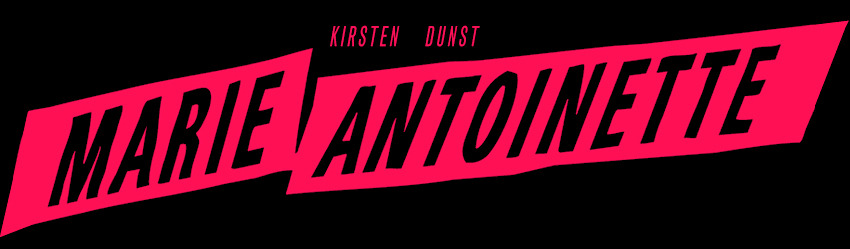
Marie Antoinette

(USA/France 2006)

“This, Madame, is Versailles.”

—Comtesse de Noailles

If her take on Marie Antoinette is any clue, Sofia Coppola loves postpunk ’80s British bands like Siouxsie and the Banshees, the Cure, New Order, and New Romantic frontrunners Adam and the Ants and Bow Wow Wow. So do I. This in all likelihood is what drew me to Marie Antoinette: with three Bow Wow Wow songs (two remixed by My Bloody Valentine’s Kevin Shields), big hair, and a real MTV sensibility, its appeal to me is, well, a piece of cake.

All that is only part of the story. What really makes me love Marie Antionette is the sympathetic angle Coppola takes with this infamous character. Based on Antonia Fraser’s biography Marie Antoinette: The Journey, the first half of the movie is about the difficulties Marie (Kirsten Dunst) faces adapting to her new French surroundings and getting her new husband, Louis XVI (Jason Schwartzman, Coppola’s cousin), to consummate their marriage. She fails, and of course everyone blames her—even her mother (Marianne Faithfull). When she’s had enough, she says “fuck it” and becomes a full on rock star. This is where things get interesting.

Colorful and elaborate, Marie Antionette is not profound. So what? Lance Acord’s music video cinematography is perfect for what Coppola is going for; bordering on sensory overload, this film is busy, clever, and fun to watch. I know better than to take it as a history lesson.

With Judy Davis, Rip Torn, Rose Byrne, Asia Argento, Molly Shannon, Shirley Henderson, Danny Huston, Mary Nighy, Jamie Dornan, Steve Coogan, Tom Hardy

Production: Pricel, Tohokushinsha Film Corporation (TFC), American Zoetrope, Pathé, Commission du Film France, Commission du Film Île-de-France

Distribution: Columbia Pictures, Sony Pictures

123 minutes
Rated PG-13

(iTunes rental) B-

http://www.sonypictures.com/movies/marieantoinette2006feature/

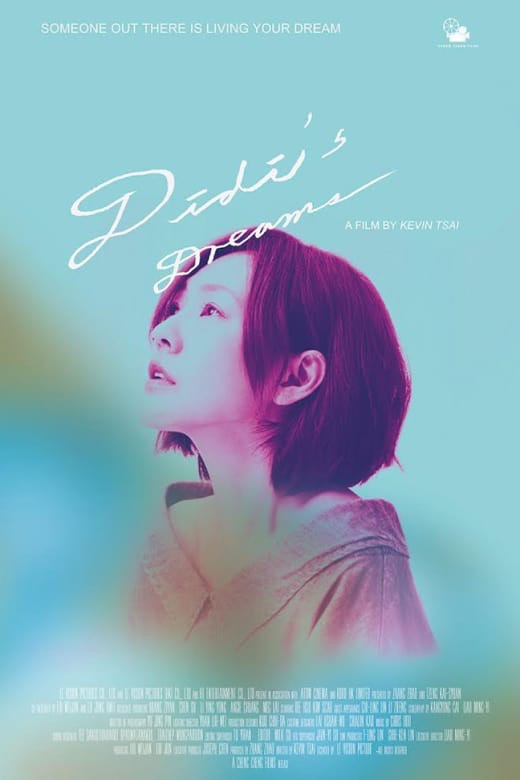
Didi’s Dreams [Didi’s Dream]

(Taiwan/China 2017)

Just in time for summer, Didi’s Dreams [吃吃的愛] is the cinematic equivalent of a glass of lemonade: cool, refreshing, and sweet with a slightly tart afterburn, it’s a real treat on a hot day. Too bad its North American run is an extremely limited one.

An intentionally fluffy melodrama, the story follows the misadventures of its titular character, Didi (Dee Hsu), a hungry young twenty-something wannabe actress. Determined to catch her big break, she auditions for anything: a probiotic commercial, a model on a QVC-type shopping network, an extra in a zombie flick, a female wrestler. She’s not exactly picky, calculated, or disciplined about getting there—she just wants to be famous. To her credit—and the dismay of many a producer and director—she’s earnest in her efforts.

Didi’s boyfriend, Xiao-kou (Scar Kim), literally rolls along with her, carting her around on his scooter. He proves to be her rock when she receives devastating news from her doctor (Chuan-cheng Tao).

Didi has a sister, Lingling (Lin Chi-lin), who also happens to be an actress—a famous one like Didi aims to be. Some bad blood between them after their mother died, shown mainly through flashbacks, caused a falling out. As a result, they haven’t spoken in years. A scandal, a TV talk show, and a twist of fate (or maybe just a publicity stunt) bring them together—cast as sisters in a major motion picture.

While all this goes on, Didi has a recurring dream about Chunmei (also played by Hsu), her psychic alterego who runs an interplanetary noodle shop in, um, outer space. Her clientele is a creature cantina of sorts. Chunmei can’t seem to get over losing her love, and it’s affecting her broth. One particular customer, an astronaut (Zifeng Li), holds her attention. While not immediately clear, a connection to Didi comes through as the story progresses.

Director Kevin Tsai keeps it mostly light here, serving up a tangy mix of comedy, tragedy, and fantasy in a wink-wink soap opera way—more Telemundo than Dynasty. Tsai and Ming-Yi Liao’s screenplay is not at all deep, but it’s packed with surprises despite a few sappy clichés. I like where the narrative goes.

Visually, Didi’s Dreams is a colorful stunner, loaded with cute faces, vivid imagery, snazzy sets, and cool costumes. Jing-Pin Yu’s cinematography glistens; it’s slick without going overboard. I can’t imagine enjoying this film as much without it. It all looks great on the big screen—my favorite scenes are at the noodle shop and that probiotic commercial.

Yes, there are flaws. However, the whole thing is put together so well, I easily forgave them. I could’ve done without the remake of “Moon River” from Breakfast at Tiffany’s over the closing credits, but the analogy is apt. Didi’s Dreams is a fun little sparkler that caught me off guard.

With Jin Shijia, David Chao, William Shen, Vincent Liang, Bruce Chen, Junior Han, Gigi Lin, Vila Fan, Yu-Lin Shen, Hank Chen, Tender Huang, Riva Chang, Berry Wen-i Kuo

Production: Cheng Cheng Films

Distribution: Le Vision Pictures, Atom Cinema, Kbro HK Limited

91 minutes
Not rated

(ShowPlace ICON) B-

http://www.chengchengfilm.com/didis-dreams-1/

Love & Anarchy [Film d’amore e d’anarchia, ovvero ‘stamattina alle 10 in via dei Fiori nella nota casa di tolleranza…’]

(Italy/France 1973)

The premise of Lina Wertmüller’s Love & Anarchy [Film d’amore e d’anarchia, ovvero ‘stamattina alle 10 in via dei Fiori nella nota casa di tolleranza…’] has the ring of something from Federico Fellini or maybe Pedro Almodóvar (though Fellini makes a lot more sense because she actually worked as his assistant for a spell).

Freckly yokel farmer Tunin (Giancarlo Giannini) learns that his friend was murdered. Why? Because he was an anarchist who was plotting to assassinate “ll Duce” Benito Mussolini. What’s more, Mussolini’s fascist police killed him. To avenge his friend’s death, Tunin takes up his cause.

Tunin ends up at a brothel in Rome. He spends a night with Salomè (Mariangela Melato), who reveals that she’s a co-conspirator for her own reasons. As the story progresses, it becomes clear that the coup is a harebrained idea.

Salomè takes Tunin to a rural spot just outside Rome with her and another prostitute, Tripolina (Lina Polito). Salomè distracts Spatoletti (Eros Pagni), the head of Mussolini’s police, while Tunin checks out the area; they then devise a plan to execute the mission.

Meanwhile, Tunin and Tripolina fall in love. Convinced that he isn’t going to make it past the assassination alive, he persuades Tripolina to spend the next two days with him.

The same radical spunk that Wertmüller exhibits in The Seduction of Mimi is just as prevalent in Love & Anarchy; this film is loaded with decadent, sexy hijinks. However, it also its share of some really tender moments—that surprised me. Love & Anarchy turns out devastatingly sad—I left the theater literally bummed out. For all its ridiculous sociopolitical and sexual shenanigans, it’s a far more powerful film.

With Pina Cei, Elena Fiore, Giuliana Calandra, Isa Bellini, Isa Danieli, Enrica Bonaccorti, Anna Bonaiuto, Anita Branzanti, Maria Sciacca, Anna Melato, Gea Linchi, Anna Stivala, Roberto Herlitzka

Production: Euro International Film, Labrador Films

Distribution: Peppercorn-Wormser, Kino Lorber

120 minutes
Not rated

(Gene Siskel Film Center) B

https://www.kinolorber.com/film/view/id/1306

Spellbound

(USA 1945)

“The Fault…is Not in Our Stars,
But in Ourselves…”

—William Shakespeare

I’ve read enough online rankings of Alfred Hitchcock’s films to know that Spellbound often ends up in his top 20 or 30—sometimes higher than that—thank you. While certainly impressive considering the number of films he directed (https://en.wikipedia.org/wiki/Alfred_Hitchcock_filmography), I found Spellbound lackluster, comparatively speaking.

It’s not that I didn’t enjoy it. In the grand scheme of all things cinema, Spellbound is a solid work—it’s just not a great Hitchcock film. Ingrid Bergman is psychoanalyst Constance Petersen, the only female doctor at Green Manors, a mental hospital in Vermont. Her male colleagues see her as detached and cold, which doesn’t bode well for her career—particularly for a woman in the 1940s.

The hospital’s director, Dr. Murchison (Leo G. Carroll), is “retiring.” His replacement is young and handsome Dr. Anthony Edwardes (a young Gregory Peck), who catches Dr. Petersen off guard. Truth be told, she’s smitten—and who can blame her? Gregory Peck is gorgeous here. Anyway, Dr. Edwardes has a secret that becomes apparent: he’s not who he says he is. He’s actually John Ballantyne, a.k.a. John Brown, a dude with amnesia who says he killed the real Dr. Edwardes and assumed his identity. Dr. Petersen doesn’t believe him, and she sets out to find the real murderer—through psychoanalysis. It all leads to a fateful ski trip that comes full circle to Green Manors. Gasp!

Angus MacPhail and Ben Hecht based their screenplay on the 1928 novel The House of Dr. Edwardes by John Palmer and Hilary A. Saunders (as Francis Beeding). Clearly obsessed with Sigmund Freud, the story is clunky but cute and oddly entertaining even if it’s kind of stupid. Two things stick out in my mind about this film: one is Salvador Dalí’s cool dream sequence complete with random objects like big bleary eyes, scissors, a faceless figure, and wings; and that final scene where a gun is fired into the camera—I won’t ruin it, but it literally ends Spellbound with a bloody bang. Fucking awesome!

The nitrate print used for this screening was gorgeous, shimmering with rich blacks and luminescent whites. It impressed me. Miklòs Ròzsa’s grand, sweeping score is fierce—no wonder he won an Oscar for it (https://www.oscars.org/oscars/ceremonies/1946).

One extremely personal but annoying detail: the Siouxsie and the Banshees song “Spellbound” played in the back of my mind the entire time I watched this film. Yeah, I’m hearing voices, I guess…but it could be much worse (I’m talking to you, Paula Abdul).

With Michael Chekhov, Rhonda Fleming, John Emery, Steven Geray, Paul Harvey, Donald Curtis, Norman Lloyd, Bill Goodwin, Wallace Ford, Art Baker, Regis Toomey

Production: Selznick International Pictures, Vanguard Films

Distribution: United Artists

111 minutes
Not rated

(Dryden Theatre) B-

Nitrate Picture Show

Phantom of the Opera

(USA 1943)

I confess, I rolled my eyes when I found out that a print of Phantom of the Opera was chosen for a screening at the Nitrate Picture Show. I was totally unenthusiastic about seeing yet another version of something I’ve already seen more times than I care to admit. The trailer calls it “[a] story the world can never forget,” but that’s only because Gaston Leroux’s damned story won’t go away.

As it turns out, I quite enjoyed Arthur Lubin’s version. He switches gears with Eric Taylor and Samuel Hoffenstein’s screenplay, ditching horror in favor of romance and melodrama. In the process, he brings a really nice camp factor to the whole thing—I didn’t expect that. His version is a sillier, more fun soapy affair than what I’m used to.

Claude Rains is sympathetic as Erique Claudin, the downsized middle-aged composer who becomes the masked phantom after his publisher (Miles Mander) “steals” his new composition. One of my favorite moments of the entire film is the publisher’s exasperated secretary (Renee Carson) throwing acid from a baking pan in Claudin’s face. It’s so bizarre, it’s actually funny. Even with his acid face, Claudin has a crazy plan for making beautiful young soprano Christine Dubois (Susanna Foster) a star, even if she’ll never return his love. Her female rivalry with diva Biancarolli (Jane Farrar) stews while Anatole (Nelson Eddy), the baritone knight in shining armor, combs the Paris Opera House for the malformed monster (that would be Claudin) who murders anyone in his way. Things get dicier the closer Anatole gets to Claudin.

Phantom of the Opera is a treat for the senses, which makes it perfect for a nitrate print. A rich Technicolor dream, it won Oscars for cinematography (W. Howard Greene and Hal Mohr) and art direction (John B. Goodman, Alexander Golitzen, Russell A. Gausman, and Ira S. Webb) (https://www.oscars.org/oscars/ceremonies/1944). Edward Ward’s score is lovely.

With Edgar Barrier, Leo Carrillo, J. Edward Bromberg, Fritz Feld, Frank Puglia, Steven Geray, Barbara Everest, Hume Cronyn, Elvira Curci, Kate Lawson

Production: Universal Pictures

Distribution: Universal Pictures (USA), General Film Distributors (GFD) (UK), Motion Picture Export Association (MPEA) (Netherlands), Realart Pictures Inc. (USA), Universal Filmverleih (West Germany)

92 minutes
Not rated

(Dryden Theatre) B-

Nitrate Picture Show

Anchors Aweigh

(USA 1945)

“What a time we had tonight, mmm!” In his 1945 New York Times review, Bosley Crowther called Anchors Aweigh a “Gay Musical Film” (http://www.nytimes.com/movie/review?res=9F0DE3DC103BEE3BBC4851DFB166838E659EDE). Well, duh!

I doubt Crowther meant “gay” in the current sense of the word, but he certainly wasn’t wrong either way: between all the singing, dancing, handsome sailors in tight pants, and a very young and wide-eyed Frank Sinatra acting out a creepy attachment to Gene Kelly, the only thing that could make Anchors Aweigh any gayer would be an appearance by Judy Garland. Or a raunchy sex scene with all those sailors and the admiral who, in one number (“We Hate to Leave”), said he would beat them with a whip. I half expected and kinda wanted it to happen, but of course it didn’t. Oh well.

As a reward for their bravery, Navy seamen Joe Brady (Kelly) and Clarence Doolittle (Sinatra) are given a four-day leave in Hollywood. Joe plans to hook up with his dame, Lola. After stalking him on the streets of Los Angeles, sweet and naive ex choir boy Clarence asks the apparently more experienced Joe to teach him how to meet girls.

Enter Donald (Dean Stockwell, whom most of us know as a middle-aged man from his many ’80s and ’90s movies), a little tyke who’s running away from home to join the navy. Our boys take him home, where Donald lives with his Aunt Susie (Kathryn Grayson), a nice girl trying to get into the movie industry—if only she could catch a break. Clarence immediately falls head over heels and enlists Joe’s assistance in wooing her, which provides the story here.

Even though (and probably because) the characters, plot, and dialogue are totally corny, Anchors Aweigh is truly a frothy blast—it’s exactly the kind of film that comes to mind when I think of classic Hollywood. A vivacious affair, director George Sidney keeps everything about it big: the sets, the songs, the dance numbers. I was particularly taken by one sequence involving Kelly and various animated figures—it culminates in an awesome song-and-dance with none other than Jerry Mouse of Tom and Jerry cartoons. Flawless!

The whole spectacle is tied up in an amazing Technicolor bow; Charles Boyle and Robert Planck’s color palette is gorgeous, and seeing it on a nitrate print literally left me breathless. From a sensory perspective, Anchors Aweigh was hands down my favorite film at this year’s Nitrate Picture Show.

As a side note, I must confess that one thing threw me for a loop: Kelly and Sinatra (and Grayson, for that matter) are young and beautiful here—not the old timers I’m accustomed to seeing having grown up when I did. They’re actually hot, even by today’s standards. Kelly upstages Sinatra throughout the entire film, which I found bizarre and quite amusing.

With José Iturbi, Pamela Britton, Grady Sutton, Rags Ragland, Billy Gilbert, William Forrest

Production: Metro-Goldwyn-Mayer

Distribution: Metro-Goldwyn-Mayer

143 minutes
Not rated

(Dryden Theatre) A-

Nitrate Picture Show

Blue Velvet

(USA 1986)

Who hasn’t seen Blue Velvet? Even though David Lynch was already established by the time it came out, it’s the film that introduced me to him. I saw it once or twice in late high school or early college, definitely on VHS. The River’s Edge was the only comparison I had, and that was a weird film but…not on the same level. I found Blue Velvet totally watchable because it’s very dark, very sexual, very fucking weird, and very voyeuristic.

That was then, this is now: Blue Velvet is still all of those things, but I don’t remember it having the sense of humor it does. It’s curiously funny. It marks the start of Lynch’s style as we know it: not just surreal (he had already done Eraserhead), but macabre and perverted underneath the innocuous and mundane premise. Lynch sets up his narrative in pieces that refer back and forth, like a moving puzzle. It’s brilliant, and it’s a formula that’s served him well.

Blue Velvet starts with a severed ear on the ground, bugs crawling all over it. A local college kid turned stalker (Kyle MacLachlan) proves a bit too curious when his minor obsession with a night club singer (Isabella Rossellini) leads him into a sadomasochistic nightmare that neither he nor we viewers can turn away from. The whole bizarre and sordid story goes full circle back to where it started: that ear. 

Dennis Hopper as Frank, the gas-huffing sociopath who ends every sentence with the F-word, colors the mood here. None of it would work, though, without Rossellini’s vulnerability, which is crucial. 

Lynch considered Molly Ringwald instead of Laura Dern and Val Kilmer instead of MacLachlan. Thank goodness it happened how it did; what a different film Blue Velvet would have been. For a movie that relies so heavily on nuance, that could’ve ruined Lynch’s career. It didn’t. 

With Hope Lange, Dean Stockwell, George Dickerson, Priscilla Pointer, Frances Bay, Jack Harvey, Ken Stovitz, Brad Dourif, Jack Nance, J. Michael Hunter, Dick Green, Fred Pickler, Philip Markert, Leonard Watkins, Moses Gibson, Selden Smith, Peter Carew, Jon Jon Snipes, Angelo Badalamenti, Jean Pierre Viale, Donald Moore, A. Michelle Depland, Michelle Sasse, Katie Reid, Sparky

Production: De Laurentiis Entertainment Group

Distribution: De Laurentiis Entertainment Group, 20th Century Fox (UK), Transmundo Films (Argentina), AMLF (France), Concorde Film (Netherlands), Concorde Filmverleih (West Germany), Finnkino (Finland), Hoyts Distribution (Australia), Shochiku-Fuji Company (Japan)

120 minutes
Rated R

(Music Box) B+

David Lynch: A Complete Retrospective

Wild at Heart

(USA 1990)

“Man, I had a boner with a capital ‘O.'”

—Sailor Ripley


“And this here’s a story with a lesson about bad ideas.”

—Lula Pace Fortune


“Don’t turn away from love, Sailor.”

—Glinda the Good Witch

Wild at Heart is one of David Lynch’s more maligned films. Roger Ebert hated it to the point of indignation (https://www.google.com/amp/www.rogerebert.com/reviews/amp/wild-at-heart-1990). Vincent Canby seemed perplexed—I can’t tell whether he was bored, annoyed, or just flummoxed (http://www.nytimes.com/movie/review?res=9C0CE5D7123EF934A2575BC0A966958260). Jonathan Rosenbaum called it “appalling,” “inept,” and “debasing” (https://www.jonathanrosenbaum.net/1990/08/bad-ideas/). A host of other critics rolled their eyes and sighed, dismissing it, I suppose, as a violent and exploitive piece of shock fluff.

I never saw Wild at Heart until now. Some of the points raised by its detractors are valid, but I still liked it for the same things that made them hate it. Erratic, vulgar, and really sweet, it’s offputting yet compelling and—surprise!—it has a happy ending.

An atypically straightforward narrative for a Lynch project, Wild at Heart is a decidedly deranged, bloody road movie/romance/thriller based on Barry Gifford’s novel of the same name. Upon his release from a North Carolina prison after serving time for murder—never mind that it was self-defense—Sailor Ripley (Nicolas Cage) exits the jailhouse to find his lover, Lula Pace Fortune (Laura Dern), waiting for him outside in the sunlight with his snakeskin jacket, the symbol of his individuality and his belief in personal freedom. They spend some time catching up in a motel room and at a speedmetal concert before they decide to blow off his parole and take off for California.

Meanwhile, Lula’s mother, Southern lady Marietta (Diane Ladd), is making plans of her own—and they involve her private detective boyfriend (Harry Dean Stanton) and a hit man (J. E. Freeman) who’s got Sailor as his target. A bad omen detours the starcrossed lovers to Big Tuna, Texas, where they unwittingly plant themselves smack in the middle of a bad situation that looks to be turning deadly fast.

OK, I’ve seen versions of this same story before. The plot is familiar and for the most part implausible—not to mention really, really thin at times. Lynch goes overboard with his depiction of sex, violence, and gore—even though they all have a place here. None of this matters, though, because the characters, which are both the focus and the strength of the film, are fantastic.

As usual, the casting is stellar. Cage is at his best here, working that edgy deadpan earnest manic thing he did so well in his early films. Dern is flawless as a sweet Southern girl who’s found her place with bad boy Sailor, everyone else be damned. Willem Dafoe is super creepy as hayseed bad guy Bobby Peru—those teeth! Above them all, however, is Ladd, who’s fucking fabulous even with her face covered in red lipstick. She’s vengeful at times, remorseful at others; but all the while, a perfect lady. She shines here. There’s a reason she was nominated for an Oscar for her performance (https://www.oscars.org/oscars/ceremonies/1991). This film works because the actors give it their all.

Wild at Heart is loaded with Lynch’s trademark what-the-fuck weirdness—a man at a bar quacking like a duck (you read that correctly) and cousin “Jingle Dell” (Crispin Glover) sitting on the floor in the bathroom screaming for Christmas or standing at the counter in the dark making a hundred sandwiches for lunch are bizarre moments even by Lynchian standards. There’s a lot more to it, though. I love the theme of finding a happy place in the midst of horrible things happening. I love all the references to various staples of Americana—cowboys, cars, highways, Elvis Presley, and my favorite, The Wizard of Oz. I love that underneath it all is a touching love story that we can all relate to.

What I find most interesting, though, is that so many things about Wild at Heart scream Quentin Tarantino, yet he had nothing to do with it. In fact, it came out two years before Tarantino’s first major film, Reservoir Dogs. I never thought of David Lynch as an influence on him, but Wild at Heart makes me wonder.

Side note: Wild at Heart is a rated R movie. For the screening I attended, however, I was lucky enough to catch an unreleased rated X version. The X rating was no doubt due to the graphic violence—it wasn’t the sex scenes. The print was in bad shape, all scratchy and beat up, but it was totally worth it to see an X-rated Lynch film.

With W. Morgan Sheppard, Grace Zabriskie, Isabella Rossellini, Sherilyn Fenn, Sheryl Lee

Production: PolyGram Filmed Entertainment, Propaganda Films

Distribution: Manifesto Film Sales, The Samuel Goldwyn Company (USA), Palace Pictures (UK), Bac Films (France), Cineplex Odeon Films (Canada), Finnkino (Finland), Hoyts Distribution (Australia), Háskólabíó (Iceland), Meteor Film Productions (Netherlands), Sandrew Film & Teater (Sweden), Solopan (Poland)

125 minutes
Rated X (alternate version)

(Music Box) B

David Lynch: A Complete Retrospective

http://www.davidlynch.de

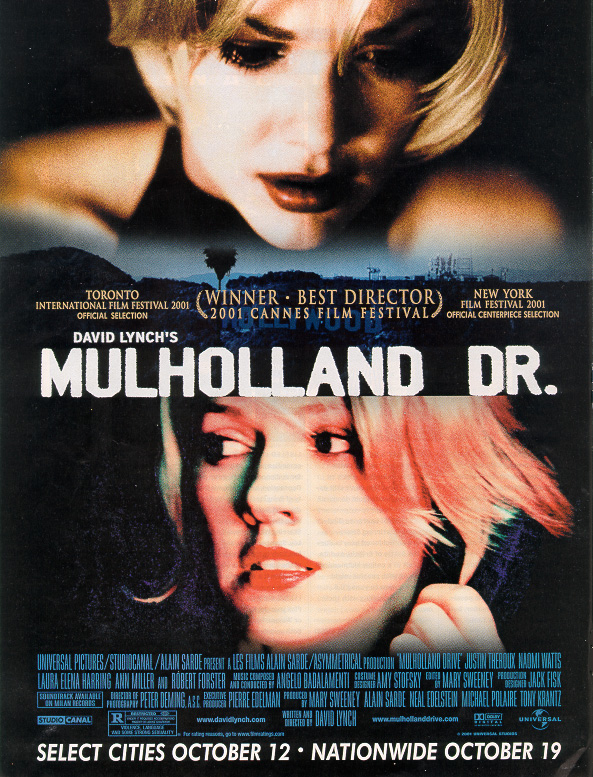
Mulholland Dr.

(USA/France 2001)

“No hay banda, il n’est pas d’orchestra. It is all an illusion.”

—The Magician at Club Silencio

The perfect opener for a retrospective on its director, Mulholland Dr. is an inimitable film that’s really hard to write about. You can look for answers online all you want, but even after seeing it multiple times you still don’t know what happens in it.

Not unless you’re David Lynch. That doesn’t make it any less enjoyable, though.

I’ve seen Mulholland Dr. maybe three times, and I’m not sure. I have my theories. Maybe they’re right, maybe not. Who cares? As with any of Lynch’s best films, the draw to Mulholland Dr. is that it’s a puzzle. He makes you work to solve it, or at least try to. He gives you just enough to go on but leaves the whole thing open to interpretation. At points, he gets you so frustrated, you lose patience and you hate him. But you don’t want him to stop. It’s artistic sadomasochism.

What began as a project for television is a mystery mindfuck tailored to the big screen. Dreamlike, hypnotic, and erotic, Mulholland Dr. is visually demanding and aesthetically worth every minute. The premise is deceptively simple: perky and wide-eyed blond actress Betty (Naomi Watts) arrives in Hollywood and bumps into beautiful young brunette Rita (Laura Harring), who can’t remember who she is after a car accident on Mulholland Drive.

As the two set out looking for clues to Rita’s identity, Lynch throws in a bunch of random characters, muddled subplots, and perplexing events. The narrative arc he puts us on comes to an abrupt halt with a small blue box the girls acquire at a night club. This is where Lynch pulls the rug out from under us.

Mulholland Dr. is definitely a love story—one fraught with competition, petty jealousies, one-upmanship, and ultimately murder. Lynch’s trademark sense of humor flickers here and there, but this is still dark stuff. I see Mulholland Dr. as a denouncement of Hollywood and all its ruthless superficiality. It’s a town that eats you up and spits you out.

Motifs of filmmaking, commerce, ego, vision, and of course the color blue stand out. Rebekah Del Rio’s performance of “Llorando” is beautifully forlorn and eerie. I would be remiss not to mention Peter Deming’s cinematography, which makes Mulholland Dr. shine.

Sadly, Lynch hasn’t done a proper film since 2006. He’s the one living filmmaker whose work I miss the most. Mulholland Dr. is a testament to why: like the street where it takes its name, this film is twisting, treacherous, and ultimately breathtaking.

With Jeanne Bates, Robert Forster, Brent Briscoe, Patrick Fischler, Michael Cooke, Bonnie Aarons, Michael J. Anderson, Ann Miller, Angelo Badalamenti, Dan Hedaya, Daniel Rey, Justin Theroux, David Schroeder, Robert Katims, Marcus Graham, Tom Morris, Melissa George, Mark Pellegrino, Vincent Castellanos, Rena Riffel, Michael Des Barres, Lori Heuring, Billy Ray Cyrus, Tad Horino, Missy Crider, Melissa Crider, Tony Longo, Geno Silva, Katharine Towne, Lee Grant, Lafayette Montgomery, Kate Forster, James Karen, Chad Everett, Wayne Grace, Rita Taggart, Michele Hicks, Michael Weatherred, Michael Fairman, Johanna Stein, Richard Green, Conti Condoli, Lyssie Powell, Scott Coffey

Production: Les Films Alain Sarde, Asymmetrical Productions, Babbo Inc., Canal+, The Picture Factory

Distribution: Universal Pictures

147 minutes
Rated R

(Music Box) A-

David Lynch: A Complete Retrospective

http://www.lynchnet.com/mdrive/