The Death and Life of Marsha P. Johnson

(USA 2017)

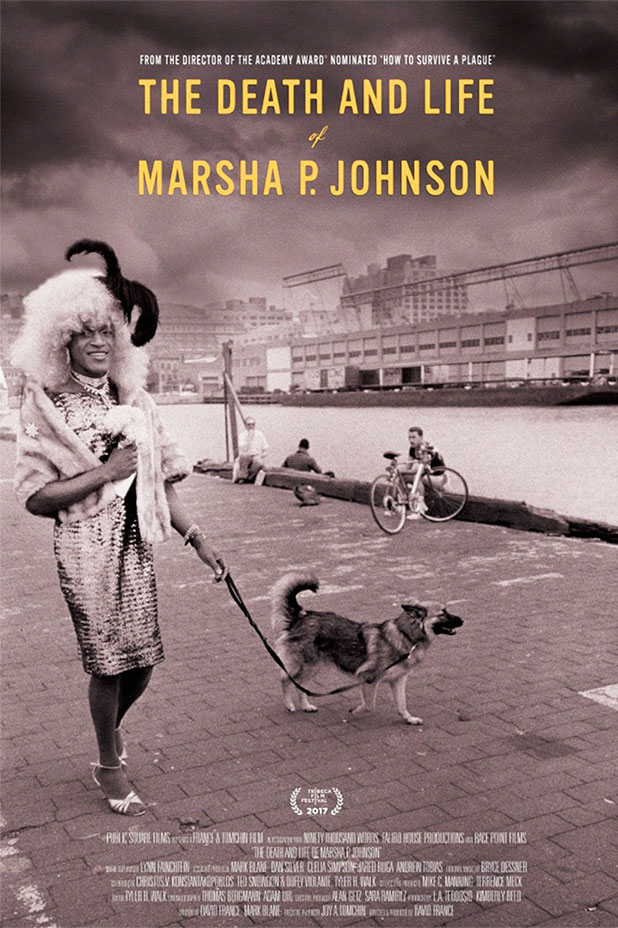
Marsha, Marsha, MARSHA! I’ll say this: David France’s new documentary has a lot going on in it. The center of the film, obviously, is legendary Greenwich Village “street queen” Marsha P. Johnson, a trans LGBT activist who hit the streets and stood at the front line when the fight was just about the “gay rights” movement. In the ’60s. Marsha, a figure at the Stonewall riots, founded Street Transvestites Action Revolutionaries, or S.T.A.R., with Sylvia Rivera in the early ’70s — 1970 to be exact. Her fight continued onto AIDS and transgender issues. She clearly was ahead of her time.

Sadly, Marsha ended up in the Hudson River in 1992, an apparent murder victim. It was almost 25 years to the date that I saw this film. The New York City Police Department called it a “suicide” — then called it a day. It remains an unsolved case.

The Death and Life of Marsha P. Johnson wants to honor Marsha, and it kind of does. At the very least, it sings her praises and puts her in a positive light. Ultimately, though, it fails. Told through the eyes of friend and surrogate Victoria Cruz, it unfortunately lets other things — mainly other people’s egos — get in the way. Part history and part true crime, Marsha’s story is watered down because French crams in more than what’s necessary to tell it, and he loses her in the process.

The Death and Life of Marsha P. Johnson succeeds in showing Marsha’s determination and influence. Perhaps unintentionally, it also shows a wonderfully colorful version of New York City in its cultural — or countercultural — prime, a place that simply doesn’t exist anymore. The hardest part of watching this film, though, is the attitude against trans people — even from gay men. It’s something you might not expect, but there it is.

From a historical or social standpoint, this is a winner. As far as Marsha is concerned, it could have been better. Still, it’s worth the time it takes to see it.

With Michael Baden, Frances Baugh, Pat Bumgardner, Jimmy Camicia, Eddie DeGrand, Matt Foreman, Jacques Garon, Chelsea Goodwin, Xena Grandichelli, Jennifer Louise Lopez, Agosto Machado, Marcus Maier, Ted Mcguire, Jean Michaels, Robert Michaels, Rusty Mae Moore, Candida Scott Piel, Coco Rodriguez, Kitty Rotolo, Vito Russo, Mark Segal, Beverly Tillery, Randy Wicker, Brian R. Wills, Sue Yacka

Production: Public Square Films, Faliro House Productions, Ninety Thousand Words, Race Point Films, Terasem Media & Films

Distribution: The Film Collaborative, Netflix

Screening introduced by David France and followed by a live Q and A with France, Mark Blane, and someone whose name I didn’t catch moderated by Alonso Duralde

105 minutes
Not rated

(Directors Guild of America) B-

Outfest Los Angeles LGBT Film Festival

https://www.netflix.com/title/80189623

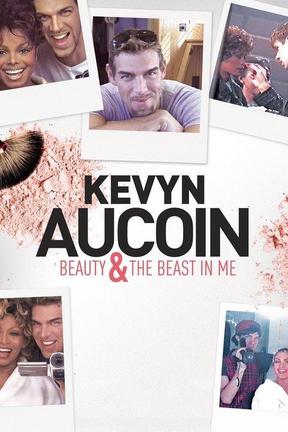
Kevyn Aucoin Beauty & the Beast in Me

(USA 2017)

“He was way ahead of his time. Just the way we do now with selfies and Snapchat and Facebook — he would have put the little Instagram kids to shame!”

— Amber Valletta


“Kevyn’s biggest motivation to succeed was his abandonment issues. He had this thought that, if I work with you and you become my friend, and I make you pretty, then you won’t abandon me. I absolutely think he was looking for a mother figure in the people that he worked with.”

— Eric Sakas

Superstar makeup artist Kevyn Aucoin lived an enviable life. He was successful doing what he loved — his work was on runways, in music videos, on award shows, and on magazine covers, at one point nine consecutive issues of Vogue. He wrote books and started a line of cosmetics.

On top of that, he hung out with models, legends, and his own idols: Kate Moss, Cindy Crawford, Naomi Campbell, Linda Evangelista, Christy Turlington, Paulina Porizkova, Susan Sarandon, Gwyneth Paltrow, Winona Ryder, Liza Minnelli, Tina Turner, Whitney Houston, Janet Jackson, Madonna, Cher, and Jennifer Lopez to name a few. Some of them were actual friends (I can only imagine Liza leaving voicemail for me).

Judging from the fact that they all let Aucoin record him with them backstage — on videotape, and not always made up — they must have felt something for him. An affinity? Safety? A debt? Whatever it was, it endeared him. Even in his home videos, he made them look good.

So it’s odd and downright tragic that someone who brought so much beauty to the world, never felt beautiful himself. Perhaps it had to do with his birth mother, Nelda Mae Williams, giving him up for adoption, or all the bullying he got as a teenager. He didn’t like his physical features, which were exaggerated by a condition that went undiagnosed for most of his life: acromegaly, a tumour on the pituitary gland that keeps the brain secreting growth hormones. It’s a painful condition that causes headaches and joint pain, and it got Aucoin addicted to prescription drugs.

A trove of home videos found after his death in 2002 forms the basis for Lori Kaye’s documentary, Kevyn Aucoin Beauty & the Beast in Me. He recorded everything — the aforementioned videos with celebrities, with family members and boyfriends, and even when he was alone. Kaye interviews different people from Aucoin’s life to tell his story, and the interviews range from funny (Andie MacDowell) to sad (ex boyfriend Eric Sakas discusses Aucoin’s downward spiral) to eyeroll-inducing (Williams claims Aucoin would not have been gay had she raised him).

His adoptive parents, Isidore and Thelma Aucoin, accepted him and even dropped out of their church because of its stance on homosexuality. He moved to New York City, and the rest is history.

The celebrity interviews are fun, and some are gushy. Some of the interviewees even cry. They all provide insight into the kind of guy Aucoin was. What Kaye has that makes her documentary special, though, is Aucoin’s tapes, and she incorporates footage from them into the project in a way that lets him tell his own story. It’s an often amusing one with a sad undertone. It also serves, as Cindy Crawford points out, as a time capsule — a really good one. I confess, a few scenes gave me chills.

With Andie MacDowell, Cindy Crawford, Naomi Campbell, Paulina Porizkova, Gwyneth Paltrow, Amber Valletta, Isidore Aucoin, Nelda Mae Williams, Jed Root, Eric Sakas, Tina Turner, Cher, Liza Minnelli, Whitney Houston, Jennifer Lopez, Janet Jackson

Production: Putti Media

Distribution: Logo Documentary Films (USA), Dogwoof (International)

World Premiere

Screening introduced by director Lori Kaye

90 minutes
Not rated

(Directors Guild of America) B-

Outfest Los Angeles LGBT Film Festival

https://www.kevynaucoindocumentary.com

Letters from Baghdad

(USA/UK/France 2016)

“We rushed into the business with our usual disregard for a comprehensive political scheme.”

—Gertrude Bell

According to the promotional poster for Sabine Krayenbühl and Zeva Oelbaum’s Letters from Baghdad, the so-called “Queen of the Desert” and “female Lawrence of Arabia” Gertrude Bell “was as controversial as the history she made.” Well, that certainly sounds promising!

Born into a wealthy family, Bell immersed herself in the Middle East in the early 20th Century and used her talents as a writer and a schmoozer to intimately acquaint herself with the area, its people, and their culture (https://en.wikipedia.org/wiki/Gertrude_Bell). Her contacts with influential expats and various Arab leaders combined with her knowledge of the culture led to an appointment as a British officer during World War I and a direct hand in drawing up the borders of modern Iraq.

Tilda Swinton gives Bell her voice, reading off camera Bell’s actual writings about events that occurred on her many trips and the people she met. In Bell’s own words, Swinton offers history, observations, and even some Victorian Era dish. Bell had at least as much influence as T. E. Lawrence a.k.a. Lawrence of Arabia (played here by Eric Loscheider in a staged “talking head” interview made to look like old footage).

Bell’s life and the impact of her deeds a century later make for an interesting story. Painstakingly researched, Krayenbühl and Oelbaum pull from diverse source material—letters, diaries, photos—to show what cities like Baghdad and Damascus were like a hundred years ago. They do a great job humaninzing Bell, getting into personality flaws and personal disappointments. In both respects, Letters to Baghdad works really well.

Not everything works as well as it could, though. Some important items are treated superfically. For example, they mention the tension between the Sunni, Shia, and Kurds even back then, but Krayenbühl and Oelbaum don’t delve into it. They touch on Bell’s reasoning for the borders she devised, but they don’t give much critical assessment to it. I left with the distinct feeling that I didn’t get the whole story. Another problem: the staged interviews give a lot of information, but they’re cheesy.

I found myself glancing at my watch about halfway through Letters from Baghdad. It’s a well made documentary, but it’s not as enthralling as it promises to be.

With Ammar Haj Ahmad, Helen Ryan, Rachael Stirling, Robert Ian Mackenzie, Christopher Villiers, Lucy Robinson, Elizabeth Rider, Michael Higgs, Joanna David, Michelle Eugene, Paul McGann, Pip Torrens

Production: Between the Rivers Productions, Letters From Baghdad, Missing in Action Films

Distribution: Vitagraph Films (USA)

95 minutes
Not rated

(Landmark Century) C

http://lettersfrombaghdadthemovie.com/about/

24 Hours in the Life of a Clown [Vingt-quatre heures de la vie d’un clown]

(France 1946)

But where are the clowns? Send in the clowns. Okay, don’t bother, two of them are in this short by the great French director Jean-Pierre Melville. 24 Hours in the Life of a Clown [Vingt-quatre heures de la vie d’un clown] is just that: a day in the life of Beby, a clown who lives in Montmarte. A multitude of fedoras costar.

In between performances at Circus Medrano, Beby walks the streets of Paris, sleeps with his little dog (but not his wife), reads fan mail, drinks at a café, and puts on makeup with his friend and fellow clown Maïss. Interestingly enough, this is not the only short to feature Maïss, who later appeared in Rodolphe Marcilly’s Centaures et pastiche in 1953.

Who knew clowns pray?

24 Hours in the Life of a Clown holds historical and artistic significance as Melville’s first film. It highlights his style, albeit in its infancy, playing with light and dark. His approach is tongue in cheek, and his “narration” (this is not a “talkie”) strongly suggests Melville knew well that his hoary little film is silly.

Still, it’s interesting if only for the scenery, all 1940s drab and threadbare, and the documentary feel of it. Beby’s apartment reminds me of the one in Eraserhead.

Production: Les Films du Panthéon

18 minutes
Not rated

(Gene Siskel Film Center) C

Žhavý jícen [Hot Throat] [Hot Gorge] [The Fiery Gorge]

(Czechoslovakia 1939)

Žhavý jícen is an industrial short produced by Pražská železářská společnost a/k/a Prague Ironworks Company. Jiří Lehovec directed it, using footage from two other short films, Výroba oceli [Steel Production] and Poklady země [Treasures of the Earth] both directed by Karel Kohout the same year.

Needless to say, there is no plot; Žhavý jícen is a demonstration of steel production. According to the festival program, it was chosen for screening for technical reasons: its “perfect definition of light in an excellent print.” I’ll give it that.

12 minutes
Not rated

Production: Pražská železářská společnost

Distribution: N/A

(Dryden Theatre) D

Nitrate Picture Show

Finding Joseph I: The HR from Bad Brains Documentary

(USA/Jamaica 2016)

How low can a punk get? Director James Lathos gives a pretty good idea with Finding Joseph I: The HR from Bad Brains Documentary, a sympathetic if sensationalistic picture of the ups and downs of punk/reggae frontman Paul “H.R.” Hudson, also known by his Jamaican name Joseph I. The film is a companion of sorts to Finding Joseph I: An Oral History of H.R. from Bad Brains by Lathos and Howie Abrams.

Lathos lays out essential information about Hudson’s unconventional and rather nomadic upbringing, his path to the limelight via the ’80s D.C. punk scene, and his spiritual journey. That last part sounds wretchedly dull, but it’s not: Hudson became a Rastafarian, and his music reflected it. The problem is, he also started to unravel around the same time, frequently leaving and rejoining Bad Brains like a dreadlocked Ross Perot.

Sure, there are early live performances that are obligatory in a documentary like Finding Joseph I; fortunately, they’re also pretty damned cool. Many of Hudson’s contemporaries offer insightful, astute, and often entertaining commentary. If he doesn’t avoid nostalgia, Lathos at least doesn’t get sappy. Smart.

All that said, I found the whole thing disconcertingly exploitative. I appreciate that somewhere in here is a point about mental health. Frankly, though, it could have been advanced without making Hudson look like such a hopeless freak. I doubt it was intentional, as this really does come off as a labor of love and not mean-spirited. Nonetheless, Finding Joseph I has an insidious ring to it.

With Earl Hudson, Ras Michael, Guy Oseary, Vernon Reid, Corey Glover, Duff McKagan, Ahmir-Khalib Thompson, Sonny Sandoval, Cro-Mags, Chino Moreno, Deftones, Fishbone, Sublime, The Wailers, Englishman, Chuck Treece, Rakaa Iriscience, Alec MacKaye, Ian MacKaye, Saul Williams, Opie Ortiz

Production: Giraffe Productions, Small Axe Films

Distribution: Small Axe Films

Screening followed by a live Q and A with Jay Mohr

92 minutes
Not rated

(The Chop Shop/1st Ward) C+

CIMMfest

http://hrdocumentary.com

Exodus: Sounds of the Great Migration [Sounds of Exodus: An Ode to the Great Migration]

(USA 2016)

Chicago filmmaker Lonnie Edwards made some waves with his 2015 documentary A Ferguson Story, which delved into some of the events following Officer Darren Wilson’s deadly shooting of unarmed black teen Michael Brown in Ferguson, Missouri. The subject of Exodus: Sounds of the Great Migration isn’t as heavy or bleak, but it’s every bit as intriguing.

Exodus: Sounds of the Great Migration is a smooth, flashy short film that honors the music and dance forms that black Americans brought to other parts of the country, mostly industrialized cities, through the Great Migration from the South during the first half of the 20th Century. In just a few minutes, Edwards demonstrates how both assimilated into urban life and continue to shape modern culture. I couldn’t find credits, but the guy tap dancing in the stairwell stood out; his taps are downright melodious.

Production: 11 Dollar Bill

Distribution:

4 minutes
Not rated

(The Chop Shop/1st Ward) B

CIMMfest

https://www.soundsofexodus.com

Sad Vacation: the Last Days of Sid and Nancy

(USA 2016)

It doesn’t get more P.R. (“punk rock”) than the final days of Sid Vicious and Nancy Spungen, the notorious and dysfunctional so-called “Romeo and Juliet of punk”—frankly, I’ve always viewed them as not too far off from John and Yoko, but I digress. Two messy heroin junkies, they bounced around for most of 1978 after the Sex Pistols disbanded. In September, they landed in Manhattan, where they rented a room at the Chelsea Hotel and Nancy appointed herself Sid’s manager. A month later, she ended up slumped next to the toilet in their room, dead from a stab wound to the abdomen (though she had multiple shallow stabs all over). Sid was arrested and allegedly confessed to her murder. While out of prison on bail, he died of a heroin overdose—some claim accidentally administered by his mother, others claim suicide—just four months later.

Danny Garcia’s Sad Vacation, a straight-to-video release coming out almost exactly 30 years after Alex Cox’s biopic Sid and Nancy, revisits these legendary rock and roll deaths. Interviewing many a soul who was there—Steve “Roadent” Conolly, Kenny “Stinker” Gordon, Hellin Killer, Walter Lure, Howie Pyro, Cynthia Ross, Gaye Black, Phyllis Stein, and Sylvain Sylvain to name a few—Garcia presents the facts, which are conflicting and not at all clear. Although Sad Vacation covers a little history of the punk movement, Malcolm McLaren, and the Sex Pistols, the focus is assiduously on what happened at the Chelsea. Narrated by Fun Lovin’ Criminals front man Huey Morgan, Sad Vacation takes on the tone of a crime documentary, laying out evidence and showing the holes in it. Not surprisingly, Garcia reveals some of the “eight thousand or so” conspiracy theories surrounding the murder, with those who knew the couple speculating on who really killed Nancy. Many point to Rockets Redglare, a drug dealer and bodyguard who worked for them. Redglare, who went on to appear in a number of films you’ve actually seen, died in 2001 (https://en.m.wikipedia.org/wiki/Rockets_Redglare).

Sad Vacation is not essential viewing; it doesn’t uncover anything new, raise any points that haven’t been raised before, or even pick a theory to endorse. It concludes that no one will ever know what happened. Big wow. That said, Garcia succeeds in showing that Sid and Nancy were kids—flawed ones, but still. After hearing words like “mess,” “dysfunctional,” and “destructive” to describe their relationship, it’s sweet to learn that his ashes were spread on her grave because they couldn’t be buried together. Now that’s P.R.

94 minutes
Not rated

(Home via iTunes) C

https://m.facebook.com/sadvacationdocumentary/

http://www.chipbakerfilms.com

Tower

(USA 2016)

On August 1, 1966, Charles Whitman, an engineering student at the University of Texas, Austin, killed his mother and his wife before taking over the observation deck of the 30-story Main Building on campus (“The Tower”). Known as the infamous “Texas Tower Sniper,” he then shot random passers-by on the mall below, terrorizing the campus for over an hour and a half. When it was over, 17 victims including him were dead and dozens were wounded (https://en.wikipedia.org/wiki/Charles_Whitman). Quite possibly the first mass shooting on a school campus in the United States—and definitely the first of this magnitude—the event resonates nearly 50 years later.

Keith Maitland’s Tower is a sort of oral history of this tragic day, and it’s compelling from the outset. I may seem to be stating the obvious here—how could the story of such an event be anything but compelling? I haven’t mentioned that the whole thing is animated—as in, a cartoon. I must admit that I was skeptical. Turning a combination of archival footage and reenactments into rotoscopes that have an offbeat King of the Hill quality sounds dubiously unfitting for many reasons. Nonetheless, Tower works unsparingly well.

With barely a mention of Whitman—his name comes up toward the end, and only incidentally—Maitland chooses to focus on those caught in the confusion. He doesn’t say who is shooting or why, putting viewers into the thick of it. He let’s survivors, heroes, and witnesses narrate their ordeals: what they were doing, who was with them, and what happened to them. Claire Wilson (Violett Beane), a pregnant teenager who was the first one shot on campus, tells about seeing her boyfriend, Thomas Eckman, die right next to her and losing her baby while she lied in a pool of her blood on the hot concrete. She also talks about the woman, Rita Starpattern (Josephine McAdam), who played dead to stay with her and keep her conscious until help could get to her. Aleck Hernandez (Aldo Ordoñez) tells about being shot in the shoulder while delivering newspapers with his cousin riding on his bicyle with him. Allen Crum (Chris Doubek), a middleaged bookstore employee, tells about dodging bullets to help a victim on the ground and winding up on the observation deck while Whitman was still shooting. Austin police officers Houston McCoy (Blair Jackson) and Ramiro Martinez (Louie Arnette) talk separately about their roles in bringing down Whitman.

Each account is unflinchingly brutal with lots of personal detail. The animation is an odd but effective way to bring us close to the action in a way that otherwise wouldn’t happen. Considering how it’s presented, Tower is surprisingly emotional and personal. I haven’t seen a documentary like this before.

96 minutes
Not rated

(Music Box) B-

http://towerdocumentary.com

Fire at Sea [Fuocoammare]

(Italy 2016)

“It is the duty of every human, if you’re human, to help these people.”

—Dr. Pietro Bartolo

Gianfranco Rosi’s Fire at Sea is inconsistent. On the plus side, it’s a beautifully shot film that recalls Italian neorealism with its ordinary characters, setting, and action. He follows a few different narratives, including a doctor, Pietro Bartolo; a pubescent boy, Samuele Pucillo; an old lady; and throngs of refugees mostly from Africa and the Middle East who arrive by boat to the sleepy Mediterranean island of Lampedusa, where these fishing townsfolk live. Using a kind of day-in-the-life approach, Rosi contrasts the lives of those who have all one way or another ended up on this island. Dr. Bartolo’s job is to examine the refugees as they arrive, and his commentary on what he’s seen is sad. Pucillo is a fisherman’s kid who’s nursing a lazy eye. The old lady (who’s name I didn’t catch and I’m not going to find it now) listens to the radio in her kitchen and requests songs for her son, who’s away at sea. I think. The refugees are something else altogether, and a few get camera time to tell their stories. There’s a great scene where a bunch of them sing a haunting African chant/rap about their persecutors. There’s another where a group of men divides up to play soccer, and we get insight into their allegiances.

On the negative side, Fire at Sea meanders. A lot. Rosi doesn’t exactly connect the refugee crisis to the islanders, so Pucillo and the old lady seem superfluous; their stories actually interfere with what I was far more interested in: the refugees. It’s a pretty and non-judgmental film, but it doesn’t take a stand. I sense a point about loss in here somewhere, but it doesn’t quite get there. I was bored during most of it, I’m sorry to say.

114 minutes
Not rated

(AMC River East) C

Chicago International Film Festival

https://www.kinolorber.com/film/view/id/2363