Saturday Church

(USA 2017)

Ulysses (Luka Kain) is a quiet, delicate teen who lives in Queens and is just starting to figure out his sexual identity — it involves wearing panty hose under his jeans. When his father dies, he becomes the “man of the house.” Unfortunately, his mother (Margot Bingham), who works all the time, is already on edge because she caught him wearing her clothes. Ulysses shares a bedroom with his younger brother, Abe (Jaylin Fletcher), who knows that he’s still rummaging through mom’s closet on the sly and gives him shit for it. School is no respite because Ulysses’s classmates are jerks.

Enter stern Aunt Rose (Regina Taylor) to help at home while mom is away at work. She takes charge, usurping Ulysses and his mother as the master of the domain. She’s not about to have a dress-wearing freak around, so she pushes Ulysses toward the one cure she knows: the Lord.

Ulysses escapes to the Christopher Street Pier, where he meets a gang of “drag queens”: Ebony (MJ Rodriguez), Dijon (Indya Moore), and Heaven (Alexia Garcia). They take him to “Saturday Church,” a space in Greenwich Village where one night a week trans mother hen Joan (Kate Bornstein) offers a meal, a shower, clothes, perhaps a spot to vogue, and companionship to homeless LGBTQ kids. This is where Ulysses finds his groove.

Too bad mean Aunt Rose is waiting for him to come home.

Damon Cardasis’s first feature length film is a winning mix of Moonlight (https://moviebloke.com/2016/11/19/moonlight/ ), La La Land (https://moviebloke.com/2016/10/13/la-la-land/ ), and Tangerine (https://moviebloke.com/2015/07/28/tangerine/ ) with just the right splash of Paris is Burning (https://moviebloke.com/2016/08/26/paris-is-burning/ ). Saturday Church has some shortcomings, but the film oozes so much charm and warmth that I found it easy to forgive its flaws. Some of the songs and dance numbers are better than others — the song in the locker room and the other with Ulysses singing to his new boyfriend (Marquis Rodriguez) as they walk to the train stand out, especially when flower petals start falling. It’s really cool.

The acting is really good all around, but Kain is particularly awesome. He gives palpable tenderness and vulnerability to his character. The so called “drag queens” are not just fierce but downright touching. The way they save Ulysses is sweet. They make you long for a friend who has your back like they do. The story here totally sold me. I look forward to what’s next from Cardasis.

With Stephen Conrad Moore, Peter Y. Kim, Evander Duck Jr.

Production: Spring Pictures, Round Films

Distribution: Samuel Goldwyn Films

Screening introduced and followed by a live Q and A with Damen Cardasis

82 minutes
Not rated

(Directors Guild of America) B-

Outfest Los Angeles LGBT Film Festival

http://www.samuelgoldwynfilms.com/saturday-church/

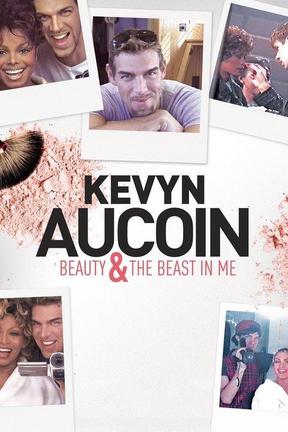
Kevyn Aucoin Beauty & the Beast in Me

(USA 2017)

“He was way ahead of his time. Just the way we do now with selfies and Snapchat and Facebook — he would have put the little Instagram kids to shame!”

— Amber Valletta


“Kevyn’s biggest motivation to succeed was his abandonment issues. He had this thought that, if I work with you and you become my friend, and I make you pretty, then you won’t abandon me. I absolutely think he was looking for a mother figure in the people that he worked with.”

— Eric Sakas

Superstar makeup artist Kevyn Aucoin lived an enviable life. He was successful doing what he loved — his work was on runways, in music videos, on award shows, and on magazine covers, at one point nine consecutive issues of Vogue. He wrote books and started a line of cosmetics.

On top of that, he hung out with models, legends, and his own idols: Kate Moss, Cindy Crawford, Naomi Campbell, Linda Evangelista, Christy Turlington, Paulina Porizkova, Susan Sarandon, Gwyneth Paltrow, Winona Ryder, Liza Minnelli, Tina Turner, Whitney Houston, Janet Jackson, Madonna, Cher, and Jennifer Lopez to name a few. Some of them were actual friends (I can only imagine Liza leaving voicemail for me).

Judging from the fact that they all let Aucoin record him with them backstage — on videotape, and not always made up — they must have felt something for him. An affinity? Safety? A debt? Whatever it was, it endeared him. Even in his home videos, he made them look good.

So it’s odd and downright tragic that someone who brought so much beauty to the world, never felt beautiful himself. Perhaps it had to do with his birth mother, Nelda Mae Williams, giving him up for adoption, or all the bullying he got as a teenager. He didn’t like his physical features, which were exaggerated by a condition that went undiagnosed for most of his life: acromegaly, a tumour on the pituitary gland that keeps the brain secreting growth hormones. It’s a painful condition that causes headaches and joint pain, and it got Aucoin addicted to prescription drugs.

A trove of home videos found after his death in 2002 forms the basis for Lori Kaye’s documentary, Kevyn Aucoin Beauty & the Beast in Me. He recorded everything — the aforementioned videos with celebrities, with family members and boyfriends, and even when he was alone. Kaye interviews different people from Aucoin’s life to tell his story, and the interviews range from funny (Andie MacDowell) to sad (ex boyfriend Eric Sakas discusses Aucoin’s downward spiral) to eyeroll-inducing (Williams claims Aucoin would not have been gay had she raised him).

His adoptive parents, Isidore and Thelma Aucoin, accepted him and even dropped out of their church because of its stance on homosexuality. He moved to New York City, and the rest is history.

The celebrity interviews are fun, and some are gushy. Some of the interviewees even cry. They all provide insight into the kind of guy Aucoin was. What Kaye has that makes her documentary special, though, is Aucoin’s tapes, and she incorporates footage from them into the project in a way that lets him tell his own story. It’s an often amusing one with a sad undertone. It also serves, as Cindy Crawford points out, as a time capsule — a really good one. I confess, a few scenes gave me chills.

With Andie MacDowell, Cindy Crawford, Naomi Campbell, Paulina Porizkova, Gwyneth Paltrow, Amber Valletta, Isidore Aucoin, Nelda Mae Williams, Jed Root, Eric Sakas, Tina Turner, Cher, Liza Minnelli, Whitney Houston, Jennifer Lopez, Janet Jackson

Production: Putti Media

Distribution: Logo Documentary Films (USA), Dogwoof (International)

World Premiere

Screening introduced by director Lori Kaye

90 minutes
Not rated

(Directors Guild of America) B-

Outfest Los Angeles LGBT Film Festival

https://www.kevynaucoindocumentary.com

God’s Own Country

(UK 2017)

Francis Lee’s first feature God’s Own Country isn’t something I’d expect to open a film festival, but already it’s opened two: the 71st Edinburgh International Film Festival and the 35th Outfest Los Angeles LGBT Film Festival. I caught it at the latter.

God’s Own Country is a slow burner about a romance between a frustrated young farmer and a migrant Romanian worker. It doesn’t start out like a typical love story, it doesn’t develop like one, and it certainly doesn’t end like one. Kudos to Lee for that. In the end, it succeeds on multiple levels.

Set in rural Yorkshire, Johnny Saxby (Josh O’Connor) is the isolated 20-something son of a middle-aged sheep farmer (Ian Hart) whose days are numbered. While his father is dying, Johnny plugs away caring for calves and sheep, obviously resenting every minute of it. Something is amiss, something that has nothing to do with the farm.

Why are you so weird, boy? Johnny are you queer, boy? Turns out, yes: we learn this early on in the film at a cattle market, where Johnny picks up a trick (John McCrea) and fucks him in the back of a trailer. This small scene tells us all we need to know about where Johnny is with his sexuality through his terse response at the end of this tryst: his trick invites him for a pint, which Johnny coldly, emphatically, and violently declines.

Enter Gheorghe (Alec Secareanu), a hot Romanian farmhand who shows up just in time for “lambing,” or birthing lambs. He’s not a talker, but his eyes and his hands say everything. Johnny is intrigued. So are we in the audience.

Deliberately paced, God’s Own Country is a big statement composed of small, seemingly inconsequential moments. Each one is anything but. Like a horror movie, a few scenes literally make me call out to Johnny to ask him, “What are you doing?” Comparisons to Ang Lee’s Brokeback Mountain are inevitable, but this is not the same story. First of all, there’s no “I can’t quit you” moment. Second, I like to think the ending is much happier even if it leaves a lot to the imagination. I can’t wait to see what Lee does next.

With Gemma Jones, Harry Lister Smith, Melanie Kilburn, Liam Thomas , Patsy Ferran, Sarah White, Alexander Suvandjiev, Stefan Dermendjiev

Production: Inflammable Films, Magic Bear Productions, Shudder Films

Distribution: Picturehouse Entertainment (UK), Orion Pictures (USA), Samuel Goldwyn Films (USA)

Screening introduced and followed by a live Q and A with director Francis Lee and actor Alec Secareanu

104 minutes
Not rated

(Orpheum Theatre) B+

Outfest Los Angeles LGBT Film Festival 

http://www.godsowncountryfilm.com

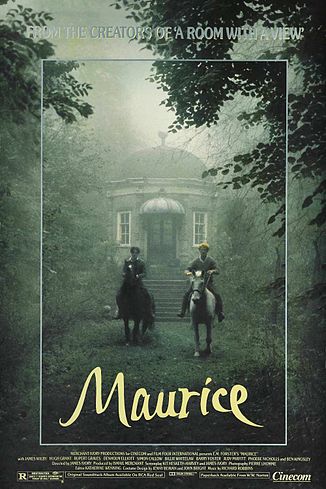
Maurice

(UK 1987)

“England has always been disinclined to accept human nature.”

— Lasker-Jones

I’m not usually a fan of period pieces, especially those set in Victorian or Edwardian England. Somehow, they tend to be stuffy, grandiloquent affairs that warrant a great big yawn — and they turn me off. James Ivory’s adaptation of E.M. Forster’s novel Maurice, however, is an exception.

I caught a 30th anniversary screening, and something crucial struck me: Ivory and cowriter Kit Hesketh-Harvey’s screenplay is downright daring even for the time when Maurice came out (no pun intended). A sort of forbidden romance that one character sees as the love of his life while the other tosses it aside as the folly of youth, I was moved by the frank depiction of gay love as a tender yet treacherous battlefield, no different than any other love — measured by intensity, law, or social construct. For this, Maurice stands way ahead of its time, even today.

Maurice Hall (James Wilby) is essentially Oscar Wilde at Cambridge circa 1910. He makes a move on social climbing classmate Clive Durham (Hugh Grant), who surprisingly welcomes his advances. They can only go so far, though: Clive doesn’t want to jeopradize his social standing, so the two maintain a platonic relationship. This is the key to Maurice, and the thing that makes it monumental: this is a film that attacks appearances.

Time goes by, shit happens, and Maurice ends up with Clive’s gutter cleaner, Alec Scudder (Rupert Graves, who looks like a plebeian Paul Young). This upsets Clive and sends Maurice to therapy. In the end, Maurice makes a choice that so many of us gays have: to be gay, or not to be.

Maurice operates on a strange platitude, one that isn’t clear at first. Maurice is vulnerable, almost stupid. Clive is chilly, reserved, and completely repressed. Both skirt around their issue. I found myself rooting for and actually admiring Maurice, who stays true to himself — class, law, and sexuality be damned. That last look on Clive’s face in the final scene is devastating…for him.

With Denholm Elliott, Simon Callow, Billie Whitelaw, Barry Foster, Judy Parfitt, Phoebe Nicholls, Ben Kingsley, Patrick Godfrey, Mark Tandy, Kitty Aldridge, Helena Michell, Catherine Rabett, Peter Eyre, Helena Bonham Carter

Production: Merchant Ivory Productions, Film Four International

Distribution: Cinecom Pictures (USA), Enterprise Pictures Limited (UK), Concorde Film (Netherlands), Cohen Media Group (USA)

140 minutes
Rated R

(Gene Siskel Film Center) B

http://www.merchantivory.com/film/maurice

The Adventures of Priscilla, Queen of the Desert

(Australia 1994)

The “road movie” is a subgenre that I think of as an American convention. They tend to involve younger people on a quest for something, perhaps a race (The Cannonball Run), a chase (Convoy), a new life (Alice Doesn’t Live Here Anymore), a vacation (National Lampoon’s Vacation), a mission (Pee-Wee’s Big Adventure), or or just getting laid (Losin’ It). They don’t usually involve gay men or drag performers or Australians for that matter, which makes The Adventures of Priscilla, Queen of the Desert rather compelling for its subversiveness if nothing else.

True, the world had seen a road movie with gay characters before (My Own Private Idaho, which predates this one by three years, comes to mind) and Australians (Roadgames, Backroads). However, The Adventures of Priscilla, Queen of the Desert is different. It’s every bit as fierce as Mad Max, but it’s fabulously fun—as though a team of drag queens tossed a bunch of glitter and disco (and CeCe Peniston) into the mix.

Anthony “Tick” Belrose a.k.a. Mitzi Del Bra (Hugo Weaving) is a drag performer in Sydney who accepts an offer to perform at a casino resort operated by his estranged wife, Marion (Sarah Chadwick), in remote Alice Springs—in the middle of the continent. He gets his buds Bernadette Bassinger (Terence Stamp), a recently widowed transgender woman, and Adam Whitely (Guy Pearce), an obnoxious younger queen whose drag name is Felicia Jollygoodfellow, to join him.

They hit the road in a huge silver tour bus that they christen “Priscilla, Queen of the Desert” and embark on a journey through the desert. A clan of Aboriginals is very welcoming, allowing the three to perform for them. Not everyone is nice, though, which they soon discover when some outbackass bumpkins spraypaint “AIDS Fuckers Go Home” across the side of the bus.

The three contend with the bus breaking down, a homophobic gang, what appears to be an inescapable bar brawl, and secrets—quite a few secrets. Some of the stuff that happens is predictable, but writer and director Stephan Elliott manages to keep the whole thing fresh because he infuses some great conflict and character development into the narrative. Bernadette’s subplot, a soul searching midlife “where do I go from here” kind of existential crisis, is probably the most interesting part of the movie. The acting—Weaving and Pearce (who looks like a cross between Brad Pitt and Mark Wahlberg) for sure, but especially Stamp—is moving for something that appears to be heading toward frivolous and campy territory. It doesn’t quite stop there. What the characters all end up with is something maybe none of us saw coming: acceptance.

What makes The Adventures of Priscilla, Queen of the Desert so great, still, is that it’s full of surprises.

With Rebel Russell, John Casey, June Marie Bennett, Murray Davies, Frank Cornelius, Bob Boyce, Leighton Picken, Maria Kmet, Joseph Kmet, Alan Dargin, Bill Hunter, Julia Cortez, Daniel Kellie, Hannah Corbett, Trevor Barrie, Ken Radley, Mark Holmes

Production: PolyGram Filmed Entertainment, Specific Films

Distribution: Gramercy Pictures, Roadshow Films

104 minutes
Rated R

(DVD purchase) B-

Center of My World [Die Mitte der Welt]

(Germany 2016)

Center of My World, director/screenwriter Jakob M. Erwa’s adaptation of German author Andreas Steinhöfel’s 1998 novel for young adults, is not a home run. Fortunately, though, Erwa knows how to extract enough charm, particularly from its two main actors, to downplay its shortcomings and proffer a respectable and enjoyable film.

17-year-old Phil (Louis Hofmann) lives with his mercurial, flighty mother, Glass (Sabine Timoteo), and his twin sister, Dianne (Ada Philine Stappenbeck), in a gorgeous house on the outskirts of town. This family isn’t exactly The Brady Bunch: Phil is gay, Dianne supposedly communicates with animals, and Glass can’t commit to a partner for very long. She won’t even tell her kids who their father is.

Phil notices some friction between the women of the house after he returns from summer camp. When school starts, his best friend, Kat (Svenja Jung), encourages him to go after mysterious new guy Nicholas (Jannik Schümann), a dreamy transfer student who looks like a cuter blue-eyed version of Lance Bass with his chiseled cheeks, luscious lips, and perfect hair. Supposedly, he likes boys. Phil finds out for sure in the locker room one afternoon—and it leads to a passionate affair, insecurity, and a weird bout of jealous competition with Kat.

Center of My World is a cute and engaging story. Erwa does a nice job showing how any kid, gay or otherwise, has a lot to deal with when it comes to sexuality. The Chaun Ngo’s cinematography is well done, employing a bright color pallette verging on artificial that plays really well against the small town setting with all its gardens and summer greenery. The acting is generally good. Schümann is really easy to just…gaze upon, I guess, but in a harmless Teen Beat way.

All that said, Center of My World would have been a much gutsier film, say, 15 years ago. It probably would have made a bigger impact then, too. It contains hints and echoes of things I’ve seen before. The characters are a bit hollow; some of them come off as half-baked, rendering their importance to the story tenuous or questionable. These two boys have sex a lot, which is great. However, the sex scenes here need work even with the full frontal we get. More in-your-face than sexy, they come off as gratuitous. I don’t know if Erwa was trying to be shocking, but it didn’t work if he was. It’s like watching two puppies go at it. I hope that’s not the intended result.

With Inka Friedrich, Sascha Alexander Geršak, Thomas Goritzki, Nina Proll, Clemens Rehbein

Production: Neue Schönhauser Filmproduktion, Prisma Film, Universum Film, mojo:pictures, Westdeutscher Rundfunk, Bayerischer Rundfunk, ARTE, Österreichischer Rundfunk

Distribution: Constantin-Film, Universum Film

115 minutes
Not rated

(Tower City Cinemas) B-

Cleveland International Film Festival

http://mitte-der-welt-film.de

https://www.facebook.com/diemittederwelt.film

King Cobra

(USA 2016)

Well now, Justin Kelly’s King Cobra looks like a film with some serious bang: it depicts the salacious, sensational, and supposedly true story of tres popular real-life gay porn actor Sean Lockhart b/k/a Brent Corrigan’s messy entry into the porn industry. Packing loads of scandal and suspense, it comes with a denouncement of sorts from Lockhart himself (https://www.google.com/amp/www.gaystarnews.com/article/brent-corrigan-condemns-gay-drama-king-cobra-bastardising-story-life/amp/?client=safari). Oh, and the money shot: a wad of bona fide Hollywood stars all in on the action. Hot yet? Not so fast, Jack: if there’s one thing I’ve learned from many an opportunity to view gay porn, it’s that looks are deceiving and the movies rarely live up to their promise. Assessing King Cobra therefore demands some deeper probing to get to the bottom of it.

Taken from Andrew E. Stoner and Peter A. Conway’s true crime exposé Cobra Killer: Gay Porn, Murder, and the Manhunt to Bring the Killers to Justice, Kelly’s screenplay gets into the real 2007 murder of Bryan Kocis, the owner and operator of Cobra Video, a real gay porn production company. As such, it makes sense that Kelly doesn’t focus on Corrigan as much as he does on Stephen (Christian Slater), a thinly fictionalized version of Kocis. A forty-something professional photographer turned producer of twink skin flicks, Stephen “discovers” Lockhart (Garrett Clayton) and signs him to make videos in a room of his suburban home in Dallas Township, Pennsylvania. Lockhart becomes Brent Corrigan, a name he plucks from the phone book, and proves to be an internet superstar as a bareback bottom. Things are strained—Stephen is clearly smitten with Lockhart, who moves in with him and does menial chores like yard work and scrubbing toilets around the house shirtless when he’s not shooting porn. Plus, Stephen is doughy and creepy. Lockhart realizes he’s being exploited and sees his potential to make a lot more money on his own. The shit hits the fan when he walks away from his contract with Cobra only to find that he can’t use his porn name because Stephen trademarked it.

Enter psychotic couple Harlow (Keegan Allen), a porn actor and rent boy, and his intense, overbearing boyfriend, Joe Kerekes (James Franco), owner of Viper Boyz, a smaller porn production company. Kerekes is a half million dollars in debt thanks to their ridiculously expensive lifestyle, which is starting to disintegrate. He’s got an idea for a sure moneymaker: Harlow and Corrigan together in a porn. They meet Lockhart, who wants to work with them but can’t use his lucrative name. Desperate to make it happen, they come up with a way to solve Lockhart’s dilemma: get rid of Stephen.

Although I didn’t love it, King Cobra is not terrible. In fact, it’s a noticeable improvement over Kelly’s first film, last year’s I Am Michael (https://moviebloke.wordpress.com/2015/10/24/i-am-michael/). That said, it still suffers from the same deficiencies. If anything, it feels underdeveloped. The two subplots—the storyline with Stephen and Lockhart, and the one with Joe and Harlow—take too long to intersect; when they do, King Cobra devolves into a gay slasher flick. Ho hum. Molly Ringwald and Alicia Silverstone are okay in their roles as Stephen’s sister and Lockhart’s mother, respectively. However, their characters are superfluous and don’t fit into the story—it’s as though they’re dropped in just to give the actors a part in the film so their names can be included on the poster. Oh yeah: another film with Franco playing a gay guy, only this time he gets his butt plowed. Big wow. For a film about the gay porn industry, King Cobra is shy about nudity; it comes off as sanitized cable soft core lite. It’s not even the whole true story; Rolling Stone ran a story about the murder of Kocis in a September 2007 issue: http://www.rollingstone.com/culture/features/death-of-a-porn-king-20070920. Kelly takes some generous artistic license, leaving out parts of what happened (and thus arousing the real Lockhart’s ire).

Kelly’s script is so overboard on gay clichés that it rings hollow. Just as he did in I Am Michael, he again gives superficial treatment to his characters here and doesn’t quite get into their heads, leaving them flat—though he does a better job with Stephen and to a somewhat lesser degree Lockhart. Kelly seems drawn to the dark side of the gays, and I won’t fault him for that. However, his way of portraying this dark side is amateurish and uninformed, recalling films like Cruising and Basic Instinct. Having seen the only two films he’s made, I have to wonder whether he knows any gay people.

I’ll end this on a positive note: Clayton is the real star of this picture. He plays Lockhart as a diva hustler, one with an agenda that no one is getting in the way of. He’s pouty, arrogant, bitchy, so stuck on himself, and unapologetic about it all. He’s brilliant! The scene where a makeup artist touches up his butt says it all.

92 minutes
Not rated

(Home via iTunes) C-

http://www.ifcfilms.com/films/king-cobra

http://gowatchit.com/microsite/4274?gwi_origin=tracking_link&gwi_origin_context=microsite#upcoming_theaters-11402

Being 17 [Quand on a 17 ans]

(France 2016)

“I don’t know if I’m into guys or just you.”

—Damien

In a pivotal scene in André Téchiné’s astute and poetic sexual awakening drama Being 17, French high school boys Damien (Kacey Mottet Klein) and Thomas (Corentin Fila) throw literary quotes at each other while studying together. As their discussion intensifies, their disparate views toward their strange attraction become clear from the material they cite: Damien is willing—eager, even—to go with his unfamiliar feelings, while Thomas fights his. The scene eloquently brings into focus the essence of the tension between them.

Being 17 takes place over the course of a school year. As the story begins, a serious animosity suddenly develops between classmates Damien, a privileged brainy blonde French teen who wears a big flashy (and probably fake) diamond earring, and Thomas, the quiet, rugged brown adopted son of animal farmers. The whole thing starts when Thomas trips Damien as he walks back to his seat in one of their classes. Their interactions grow increasingly hostile and physical: shoving, slapping, and punching. It isn’t clear why, but the two can’t keep their hands—or eyes—off each other. The plot thickens when Damien’s mother (Sandrine Kiberlain), a physician in the remote mountain town where they live, arranges for Thomas to move in with her and Damien while his mother (Mama Prassinos) works through a difficult pregnancy. In a more intimate setting, the boys play a prickly game of cat and mouse as they gingerly let down their guard—only to an extent.

At times, Being 17 pushes suspension of disbelief to its edge. Still, it’s an achingly moving story that is extremely well executed. Even when the interactions between Damien and Thomas get, um, sultry—and they do—this isn’t so much a “gay” film as it is commentary on the power of desire. Téchiné wrote the script with Céline Sciamma, and they explore how hostility and desire play on each other. It’s a complicated dynamic: suspenseful, exciting, and confusing. Alexis Rault’s haunting score lends a pensive, masculine, almost Old Western touch that fits in perfectly. Julien Hirsch’s hazy cinematography gives the film a dreamy, sensual quality that highlights the natural beauty of the settings: the mountains, the lake, the snow, even the fields in the spring. It works really well showing both characters making it through the wilderness, figuratively and literally.

116 minutes
Not rated

(Gene Siskel Film Center) B

http://www.elledriver.fr/being-17/

Closet Monster

(Canada 2016)

I wish I could play Bronski Beat’s “Smalltown Boy” for Closet Monster‘s protagonist, Oscar Madly (Connor Jessup), because the lyrics say something he needs to hear: the answers you seek and the love that you need will never be found at home. Sigh.

When young Oscar (Jack Fulton) is a wee lad of maybe seven or eight, his parents give him a hamster (played by four different actors: Chunk, Mama, Blood Thirsty, and Buffy #1). The gift, it turns out, is intended to take the sting out of their explosive announcement: his mother (Joanne Kelly) is leaving his father, Peter (Aaron Abrams). It doesn’t take long to see why, as Peter is an oppressive loose cannon. Oscar stays with his father and quietly retreats into his own world where his new furry friend, Buffy, becomes his companion and has a way of expressing what Oscar is feeling (Isabella Rossellini, of all people, provides Buffy’s voice).

One afternoon after school, Oscar follows a group of older teenage boys into a cemetery. Unbeknownst to them, he watches from behind a tree as they barbarously attack another boy—presumably a gay one—with a rusty iron rod. Immediately after, Oscar notices his father is a toxic alpha male asshole. Determined to prevent something horrible from happening to him, he jumps into survival mode and starts doing “guy” things.

Cut to a decade later: Oscar (Jessup) is into creating monsters with makeup and prosthetics, practicing in his treehouse on his friend Gemma (Sofia Banzhaf), an aspiring model who carries a torch for him. They both just finished high school. Oscar bides his time that summer working as a stockboy at a home improvement store while waiting for an acceptance letter from a school with a design program for cinematic special effects to which he’s applied. He’s completely beside himself when a new employee named Wilder (Aliocha Schneider) shows up and asks to borrow his work shirt. Wilder is cool, sexy, and has a way of transmitting ambiguous sexual signs—causing Oscar severe stomachaches and visions of that iron rod.

Writer and director Stephen Dunn’s first feature threw me for a loop, in a really good way. Closet Monster is packed with gay coming of age clichés, but it still stands on its own. Oscar’s homosexuality is more than incidental, but it’s no dark secret; Oscar knows he’s gay and he doesn’t seem to be ashamed of it, even if dealing with it is tricky. The cast here is excellent, particularly the exchanges between Jessup and Schneider (not to marginalize the other actors). Dunn exhibits a dinstinctive style both in how he tells his story and how he shows it. From a narrative standpoint, he concocts a compelling mix of comedy, teen drama, fantasy, horror, gore, and psychological intrigue. The tension between Oscar and Peter is palpable, simmering from a quiet friction to an all-out eruption.

Dunn’s visuals are even better: vivid, surreal imagery of iron rods popping out of Oscar and vomiting nuts and bolts into a sink, they indelibly illustrate what’s going on in his head. Peppered with retro electronica, I pick up a certain late ’80s/’90s vibe here; indeed, Dunn’s aesthetic reminds me of David Fincher, Spike Jonze, Michel Gondry, and to a lesser extent Anton Corbijn, all of whom started out doing music videos. Dunn’s sensibility is similar to another young director, Xander Robin (Are We Not Cats) (https://moviebloke.wordpress.com/2016/10/15/are-we-not-cats/), though Dunn is not as dark. Closet Monster has a few shortcomings, but overall it gels nicely into a totally satisfying film.

90 minutes
Not rated

(Facets) B

http://rhombusmedia.com/film/closet-monster/

http://www.strandreleasing.com/films/closet-monster/

https://youtu.be/RTgM1e8w05g

Moonlight

(USA 2016)

“At some point, you got to decide for yourself who you’re going to be. Can’t let nobody make that decision for you.”

—Juan

A few films impressed me this year, but so far none have moved me like Moonlight, screenwriter and director Barry Jenkins’s first project in eight years. Inspired by Tarell Alvin McCraney’s piece In Moonlight Black Boys Look Blue, Moonlight peers into three brief but pivotal intervals in the life of Chiron, a poor black kid in a Miami hood, as he grows up, struggling to connect to the world and find his place in it. This doesn’t sound revolutionary—I could say the same thing to summarize a handful of other movies—but Moonlight is different; it’s not merely Boyz N the Hood or Precious with a gay protagonist. Executed beautifully and flawlessly in three “acts,” it covers a lot of ground—blackness for sure, but also family relationships, sexuality, masculinity, and identity. I relate to so much about it even though my world is nothing like the one it depicts. Jenkins hits something universal, and I can’t imagine many people walking away from this film not feeling it.

WARNING: Potential spoilers ahead!

Act one: It’s clear from the outset that something is different about Chiron, who everyone calls “Little” (Alex Hibbert). He’s quiet and contemplative. A group of boys chases him into a dope hole, an abandoned apartment building or motel where junkies do drugs. Juan (Mahershala Ali), a dealer, finds him hiding out there. Chiron won’t talk even after Juan takes him to eat. He warms up a little when he meets Juan’s girlfriend, Teresa (Janelle Monáe), but he’s still guarded. Chiron’s mother (Naomie Harris), who has a difficult relationship with her son, knows he’s not like other boys.

When Chiron is kicked off the field during a game of something—soccer or football, I don’t remember—a classmate, Kevin (Jaden Piner), runs after him. He tells Chiron he’s “funny” before he picks a fake fight with him to get Chiron to show the other boys that he’s not “soft.” Apparently, they don’t buy it: “What’s a faggot? Am I a faggot? How do I know?” are some of the questions Chiron peppers Juan with not long afterward.

Act two: Chiron (Ashton Sanders), trying to shed “Little,” is a scrawny teenager. He’s still dodging bullies, particularly Terrel (Patrick Decile). He’s also still friendly with Kevin (Jharrel Jerome), who brags about his sexual exploits and smokes a lot of pot. Chiron has a thing for him. They share a surprise moment on the beach one night—it’s deep for Chiron. Too bad things go violently sideways when they’re back at school the next day.

Act three: Chiron, now “Black” (Trevante Rhodes)—incidentally, the name Kevin gives him in high school—is his 20s and living in Atlanta. He emulates Juan, and not just by following in his footsteps selling drugs. Kevin (André Holland) calls out of the blue. He’s a cook in Miami. He says that a guy played a song on the jukebox where he works that reminded him of Chiron, and he offers to make him dinner sometime. It’s a weird call that gets to Chiron, who still carries a torch for Kevin.

After visiting his mother at a treatment center, he heads down to Miami and finds Kevin at the restaurant where he works. They skirt around a bit, and Kevin plays the song: “Hello Stranger” by Barbara Lewis, a smooth ‘60s R&B track with lyrics like “I’m so glad you stopped by to say hello to me” and “If you’re not gonna stay please don’t treat me like you did before because I still love you so.” Kevin vaguely seems to come on to Chiron, who doesn’t understand why Kevin called him—though he seems glad he did.

The sum of Moonlight is greater than its parts, but its parts are still great. The plot is fluid, driven more by dialogue and little moments—like Juan teaching Chiron how to swim, Teresa making the bed for Chiron, and Kevin cooking him dinner—than building up to any single climax. Moonlight is voyeuristic, crammed with moments that are so personal it feels like we shouldn’t be watching. The third act is strange and even a bit slow, but it’s brilliant nonetheless. Chiron and Kevin’s meeting is suspenseful and confusing, percolating with an urgent and erotic undertone. Something about how they convey what they’re feeling with just their eyes makes you actually want to see them kiss. Kevin sums up what the film is all about in one question when he asks Chiron point blank, “Who is you?” The end is unresolved, but it’s perfect.

Moonlight is as close to poetry as a movie gets. James Laxton’s cinematography uses colors that are so lush that you can actually feel the humidity in the air. The night scenes, especially on the beach, are an odd mix of serene and ghostly.

Side note: Chiron’s mother is an interesting character. She seems overprotective at first, wearing scrubs and a name tag when we first see her rushing up to Chiron as Juan brings him home the next day. Upset with Chiron for not coming home, she revokes his TV privileges and tells him to find something to read. Sensible parenting, perhaps; but a lot here is not how it appears. It doesn’t take long to see that she’s a mess. Likewise, it doesn’t take long to see that Juan is not the thug he appears to be. Nothing about Moonlight is what its seems on the surface.

111 minutes
Rated R

(AMC River East) A+

http://moonlight.movie