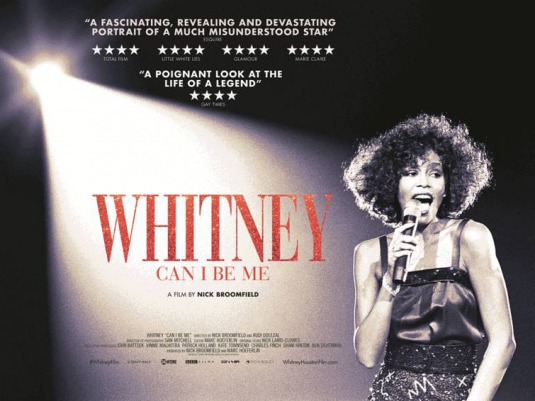
Whitney: Can I Be Me?

(UK / USA 2017)

Whitney Houston certainly needs no introduction, and I don’t need to remind anyone about her drug-fueled decline or her sad death five years ago. I saw her perform once when she toured for her first album, but I was never a fan. Still, I observed her career from the sidelines and know all her hits (and misses). To borrow from one of her songs, she almost had it all. Almost.

Co-director Nick Broomfield said that with Whitney: Can I Be Me?, he wanted to show another side of the story: “There was very little attempt to really understand where this was coming from or what it was about. I would like a lot of people to feel that there was a whole other way of looking at this.” (http://www.rollingstone.com/movies/features/whitney-houston-documentary-director-speaks-out-she-was-so-judged-w497676 ). It’s a good idea: fair and balanced, OK.

For better or for worse, Broomfield, who shares a directing credit with Rudi Dolezal for his footage from Houston’s 1999 My Love Is Your Love World Tour, takes a decidedly conventional and low key approach here. He eschews TMZ-like sensationalism, which is refreshing, even admirable. However, the finished product rings incomplete.

Broomfield shows Houston’s dirty laundry. We learn that she used drugs from adolescence. She wasn’t particularly polished. Her mother pushed her, hard. Her label, Arista, had a grand plan for her, and it specifically excluded drawing a black audience. Her BFF Robyn Crawford, who stayed involved with Houston’s career until the aforementioned 1999 tour, was (and still is) a lesbian, which led to rumors. Houston and Bobby Brown were in love, but it didn’t stop him from cheating on her — apparently, he preyed on Houston’s entourage. Crawford and Brown didn’t get along, which created tension. There was also that thing with Houston’s father that happened at the end of his life.

We gets hints and glimpses of what led to Houston’s downfall, but in the end the whole thing is shallow. Like her image throughout her career, Whitney: Can I Be Me? presents a sanitized or at least downplayed picture. Broomfield could’ve dug deeper. He was getting there with Houston’s former bodyguard, David Roberts, who claims that he was repeatedly ignored when he warned everyone around her that Houston was on a fatal trajectory. This documentary falls short; it’s flat and has nothing, shall we say, so emotional. It doesn’t reveal all that much. As a result, it isn’t all that moving.

Another biographical documentary about Houston is in the works (https://www.theguardian.com/film/2016/apr/28/kevin-macdonald-official-whitney-houston-documentary ) ( http://www.whitneyhouston.com/news/director-kevin-macdonald-whitney-houston-documentary/ ). So, there’s more to come. Let’s hope Kevin MacDonald’s version is more compelling.

With David Roberts, Cissy Houston, John Russell Houston Jr., Bobbi Kristina Brown, Bobby Brown, Robyn Crawford

Production: Lafayette Films, Passion Pictures, Showtime Networks

Distribution: Showtime (USA), British Broadcasting Corporation (BBC) (UK), Arsenal Filmverleih (Germany), Eagle Pictures (Italy), Periscoop Film (Netherlands)

105 minutes
Not rated

(Gene Siskel Film Center) C

http://www.sho.com/titles/3433528/whitney-can-i-be-me

Valley Girl

(USA 1983)

“Girls, we must fuck him.”

— Loryn


“Man, he’s like tripendicular, ya know?”

— Julie Richman


“Kings and queens, they don’t grow on trees.”

— Prom Teacher


“Well, fuck you, for sure, like totally!”

— Randy

“Bitchin’! Is this in 3D?” asks Tommy (Michael Bowen), whom no other Val dude can touch. It’s a fair question for a ticket taker wearing 3D glasses, I guess. “No,” responds Randy (Nicolas Cage) nonchalantly as he rips his ticket. “But your face is.” Burn!

I don’t know why Deborah Foreman isn’t on the poster, but I can’t help love Valley Girl. Directed by Martha Coolidge and written by Andrew Lane and Wayne Crawford, it’s a classic that always makes me smile. It’s not because it’s Nicolas Cage’s debut as Nicolas Cage (before Valley Girl, he was Nicolas Coppola). It’s not because it comes straight from the early ‘80s, or because it’s got a totally narly-ass soundtrack, or because of its awesome lines, or because it resonates, like, totally. It’s all of that. And more.

Well, like, it’s sushi, don’t you know? No one will mistake Valley Girl for anything but a product of its time. However, anyone can identify with the dilemma of Julie Richman (Foreman), who’s into Randy (Cage) because he’s not like all the other guys at school, but her friends don’t approve because, well, he’s not like all the other guys at school. He’s from the city — Hollywood, to be exact — and he’s new wave. Oh, the horror!

Randy sweeps Julie off her feet, taking her on a wild ride and introducing her to things you don’t get in the Valley. Her friends, shallow as they are, pressure her to drop Randy for Val dude Tommy (Bowen), who fits their idea of the right guy for Julie — never mind that they already dated and she broke it off because he made her feel “like an old chair or something.” Julie’s heart tells her not to do it. When her friends all but blacklist her, she capitulates. Spoiler alert: she’s not happy.

Randy’s heart is broken, but he won’t give up. He goes undercover, showing up literally everywhere Julie goes — drive-through diners, movie theaters, even camping out on her front lawn. Thanks to Randy’s bestie Fred (Cameron Dye), a plan to win Julie back comes together at her prom — which, incidentally, features Josie Cotton performing.

Part Rebel Without a CauseFast Times at Ridgemont HighGrease, and even The Graduate (Lee Purcell as Stacey’s mother is fantastic), Valley Girl is definitely romantic. It’s also fun and full of heart. The ending is predictable, but I wouldn’t have it any other way.

With Elizabeth Daily, Heidi Holicker, Michelle Meyrink, Tina Theberge, Richard Sanders, Colleen Camp, Frederic Forrest, David Ensor, Joanne Baron, Tony Markes, Camille Calvet, The Plimsouls

Production: Valley 9000

Distribution: Atlantic Releasing

99 minutes
Rated R

(Impact) B

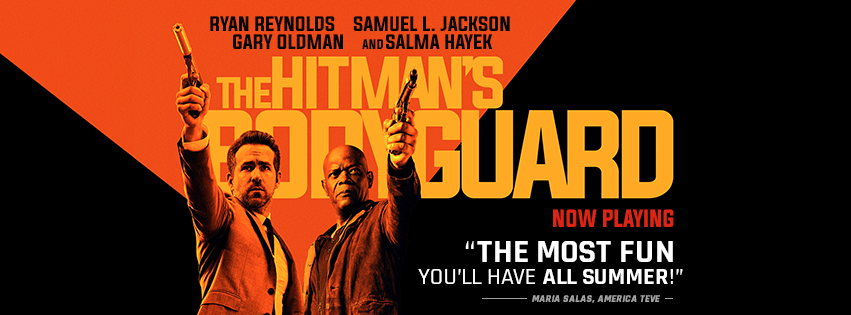
The Hitman’s Bodyguard

(USA 2017)

“Get Triggered,” commands one of the movie posters for Patrick Hughes’s The Hitman’s Bodyguard. I don’t know what that means here, but this film is a bit fluffy to trigger much more than some chuckles — after all the eyerolling, of course. That’s how it went for me.

Ryan Reynolds is Michael Bryce, a humiliated professional bodyguard whose career took a hit — get it? — after a client (Tsuwayuki Saotome) was shot and killed right in front of him. Now, he barely ekes out a living guarding low profile corporate executives addicted to speed. He operates out of his run down car, which is where he also lives (as evident from his “bathroom,” an empty water bottle). To make matters worse, Michael is still reeling from a breakup with Amelia (Élodie Yung), an Interpol agent he blames for his sad state.

Amelia is charged with a simple but very consequential mission: to deliver notorious hitman Darius Kincaid (Samuel L. Jackson) to the International Court of Justice at the Hague. Darius has agreed to testify against Vladislav Dukhovich (Gary Oldman), the depraved dictator of Belarus on trial for crimes against humanity. Unfortunately for the prosecution, Dukhovich has a stalwart and invincible army of goons that hunts and kills any witness who has any dirt on him. Darius is the prosecution’s last hope, and the clock is ticking.

When Amelia’s armored car is attacked by Dukhovich’s men, she and Darius go into hiding. She contacts Michael for a favor: to complete the mission and get the star witness to the Hague. She doesn’t tell him who the witness is, and it turns out that Michael and Darius have a history. It ain’t pretty.

Not surprisingly, The Hitman’s Bodyguard is light fare, a stock comedy/action quasi buddy flick. It’s a perfect summer movie; frankly, I’m not sure why it wasn’t released earlier. Tom O’Connor’s screenplay is repetitive, predictable, and loaded with F-bombs, but it’s fun and isn’t at all serious. Reynolds and Jackson have an amusing love/hate relationship filled with banter about everything from murder to love to pop music that wouldn’t be out of place in Pulp Fiction. In between their banter is nonstop action — car chases, explosions, shoot outs in helicopters and boats, cat and mouse games.

Jackson does what he does best: causes grief and cusses with force. Reynolds plays a good square with earnestness. If these two had better chemistry, The Hitman’s Bodyguard would be a more memorable film. Salma Hayek is the best thing about this movie: she’s dramatic and severe and hilarious as Sonia Kincaid, the streetwise but still crazy wife of Darius. Rotting away in an Amsterdam prison, she’s relentless about protesting the grave injustice done to her. She effortlessly steals every scene she’s in.

With Michael Gor, Tine Joustra, Yuri Kolokolnikov, Rod Hallett, Joaquim de Almeida, Kirsty Mitchell, Richard E. Grant

Production: Millennium Films, Cristal Pictures

Distribution: Lionsgate Films

118 minutes
Rated R

(ArcLight) C+

http://www.thehitmansbodyguard.movie/mobile/

Postcards from the Edge

(USA 1990)

“I’ll rinse these. I have Woolite in my purse. It’s handy for the road.”

— Doris Mann

Postcards from the Edge is, of course, Carrie Fisher’s semi-autobiographical novel about a floundering actress, Suzanne Vale (Meryl Streep), teetering on has-been status as she puts her life back together after a near fatal overdose. For her film adaptation, Fisher shifts the focus from the rehabilitation process to the relationship between Suzanne and her mother, legendary Hollywood superstar Doris Mann (Shirley MacLaine). It’s a good call: as last year’s documentary Bright Lights: Starring Carrie Fisher and Debbie Reynolds (https://moviebloke.com/tag/bright-lights-starring-carrie-fisher-and-debbie-reynolds/ ) demonstrated, Fisher and Reynolds were a solid and supportive albeit wacky team. Their relationship clearly offers ample fodder for this film.

Ably directed by Mike Nichols, Postcards from the Edge takes on addiction, family relationships, and show biz. In order to continue a film she’s working on, Vale must place herself under the care of a “responsible” adult — strictly for insurance purposes, a producer (Rob Reiner) assures her. That leaves her mother, who’s more than willing to help. In fact, it makes her beam all the more. So, Vale does what she must: she moves into her mother’s mansion in Beverly Hills.

Fisher might embellish a few things or flat out make shit up, like the sleeping pill story and her mother’s closet alcoholism. Maybe not. It doesn’t matter: Streep is excellent here, as is the entire cast. The real fun, though, is watching MacLaine emulate Reynolds. She has every tick and foible down perfectly. The homecoming party Doris throws for Suzanne and the is snarky, hilarious, and illuminating — I have the distinct impression that it really happened exactly the way it plays out here. Genius!

With Dennis Quaid, Gene Hackman, Richard Dreyfuss, Mary Wickes, Conrad Bain, Annette Bening, Simon Callow, Gary Morton, C. C. H. Pounder, Robin Bartlett, Barbara Garrick, Anthony Heald

Production: Columbia Pictures Corporation

Distribution: Columbia Pictures, Columbia TriStar Films

101 minutes
Rated R

(MoviePlex) B

http://www.sonypicturesmuseum.com/collection/719/postcards-from-the-edge

Dunkirk

(USA / UK / France / Netherlands 2017)

I have mixed feelings about Christopher Nolan’s spectacular Dunkirk, a World War II military drama that has very little to do with battle. Told from three perspectives — land (“the mole”), sea, and air — the story here centers on an evacuation, that of British and allied soldiers from the beaches of Dunkirk, a fishing village in northern France at the Belgian border, over a ten-day period in late Spring 1940 (https://en.wikipedia.org/wiki/Dunkirk_evacuation).

I have to admit ignorance here: I knew nothing about the Dunkirk evacuation going into this film. Nolan doesn’t spend any time on background or what led to this point; instead, he just picks up with British soldier Tommy (Fionn Whitehead) fleeing German fire outside the beach. I wish I had known ahead of time because I would have done some research. I thought a better job could have been done telling the story.

The structure, jumping between the three perspectives, takes a little work to follow. What exactly is going on is unclear and confusing, and it creates a nice sense of claustrophobia and panic in many scenes — especially that boat scene. This is good. However, keeping track of the characters is a tough task not made any easier by giving all the soldiers the exact same black hair dye. I found it hard to relate to or care much about any of them because I was kept at arm’s length. I couldn’t get invested. While definitely not the same story, Dunkirk is a kind of a big budget Son of Saul — just not as good.

As a spectacle, though, Dunkirk is magnificent. Cinematographer Hoyte van Hoytema shot it on 70 millimeter film, and he packs this picture with gorgeous wide shots of the beach, the sea, and throngs of desperate soldiers. He beautifully captures the hopelessness of the situation with a drab palette of only a few army colors: greens, greys, blues, and cold whites that convey a chill I could see and feel. The sound is over the top loud. If nothing else, Dunkirk is total sensory overload. It’s worth seeing for that alone.

Side note: I’m not sure which is the bigger surprise here — that 1D’s Harry Styles actually isn’t terrible, or that Tom Hardy is hidden under aviator goggles for the entire film. The latter is a bummer. He’s so hot!

With Mark Rylance, Tom Glynn-Carney, Jack Lowden, Aneurin Barnard, James D’Arcy, Barry Keoghan, Kenneth Branagh, Cillian Murphy, Michael Caine

Production: Syncopy, Warner Brothers, Dombey Street Productions, Kaap Holland Film, Canal+, Ciné+, RatPac-Dune Entertainment

Distribution: Warner Brothers, Karo Premiere (Russia), NOS Audiovisuais (Portugal), Roadshow Entertainment (New Zealand), Roadshow Films (Australia)

106 minutes
Rated PG-13

(Music Box) C+

http://www.dunkirkmovie.com

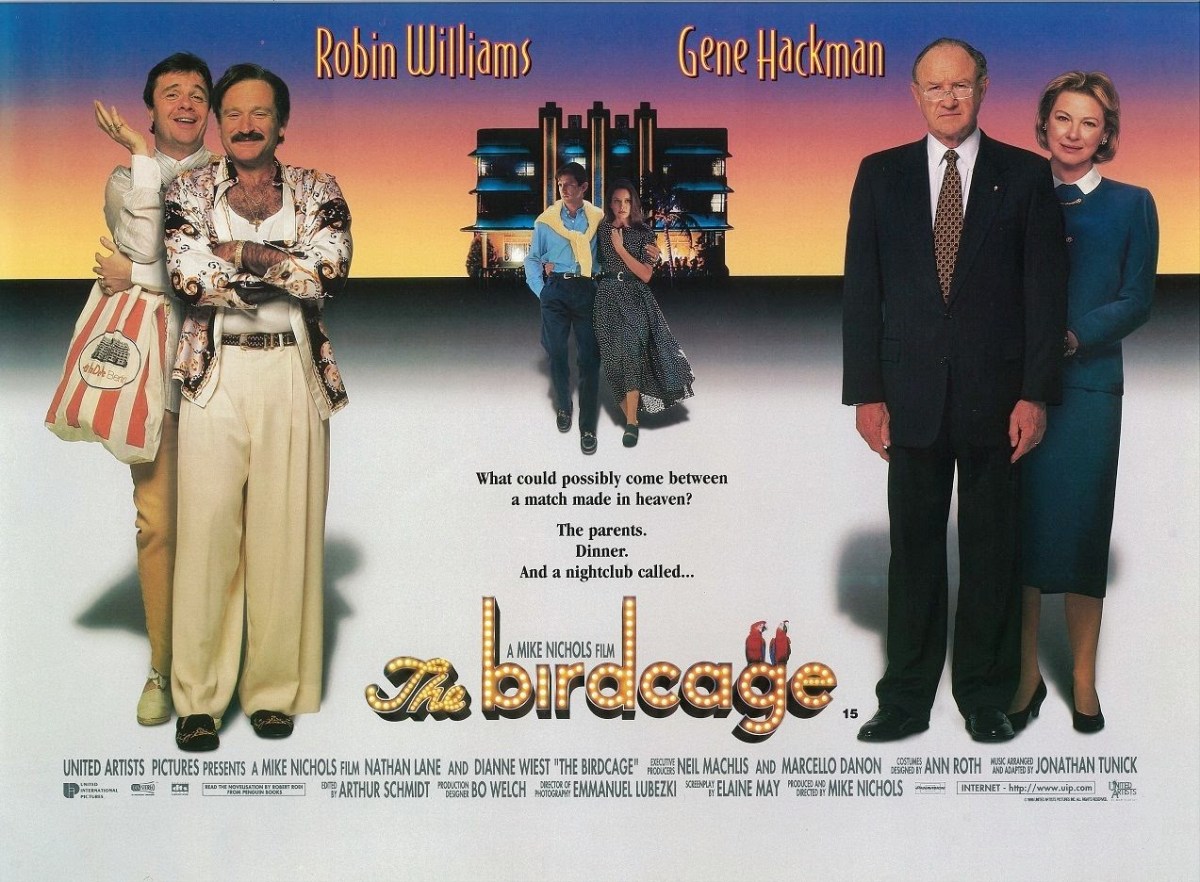
The Birdcage

(USA 1996)

“It’s aspirin with the ‘A’ and the ‘S’ scraped off.”

— Agador

Mark Caro’s latest presentation in his “Is It Still Funny?” series, The Birdcage, is director Mike Nichols’s 1996 Americanized remake of Jean Poiret’s classic 1979 French farce La Cage aux Folles. I’m not sure it was intentional, but this presentation coincides with National Drag Day, something I didn’t know existed.

I left the theater with three impressions: one, things have changed quite a bit in two decades; two, The Birdcage is still funny even if it is silly and dated; and three, Robin Williams could do anything well.

Armand Goldman (Williams) owns and operates a drag nightclub, the Birdcage, in South Beach. His flamboyant husband, Albert (Nathan Lane), is the club’s star attraction. Armand’s son, Val (Dan Futterman), announces his engagement to Barbara Keeley (Calista Flockhart), the daughter of right wing Republican senator Kevin Keeley (Gene Hackman). The kids want to — and should — introduce their parents to each other, but the problem is Barbara’s father, who no doubt will not approve.

Val has a solution: Armand can fake being straight — and married to his biological mother, Katherine Archer (Christine Baranski), who didn’t have much to do with him growing up but maybe will do him this one solid. And the Keeleys will be no worse not knowing the truth.

Albert, who’s a gay giveaway, can’t be part of it. He can’t even be around. This puts Armand — and the entire household — in a tricky situation. Albert is delicate at the moment, and this will hurt him. Little does anyone know how important he’ll prove to be in pulling off the ruse.

It’s easy to dismiss The Birdcage as fluff. The whole thing — plot, setting, characters, that dinner — is really, really silly. The humor relies heavily on stereotypes — histrionic Albert, house “boy” Agador (Hank Azaria), and conservative Kevin are the most obvious examples. Madonna dancers Luis Camacho and Kevin Stea have bit parts as…dancers, big shock. There’s a lot of camp and physical humor here, which doesn’t make for sophisticated comedy.

Nonetheless, the actors bring it, particularly Lane, who imbues his role with unexpected tenderness. Elaine May updates and punches up the screenplay with political jabs and cultural witticisms. At the center of the insanity is Williams, who despite a few glimmers of his wacky old self (“You do Fosse, Fosse, Fosse! You do Martha Graham, Martha Graham, Martha Graham! Or Twyla, Twyla, Twyla! Or Michael Kidd, Michael Kidd, Michael Kidd, Michael Kidd! Or Madonna, Madonna, Madonna!”), plays the Straight Man — that might sound contradictory considering his character here, but I’m not referring to his orientation. And he does it well. The result is a guilty pleasure.

With Dianne Wiest, Tom McGowan, Grant Heslov, James Lally, Luca Tommassini, André Fuentes, Tony Gonzalez, Dante Lamar Henderson, Scott Kaske, Tim Kelleher, Ann Cusack, Stanley DeSantis, J. Roy Helland, Anthony Giaimo, Lee Delano, David Sage, Michael Kinsley, Tony Snow, Dorothy Constantine

Production: United Artists Pictures

Distribution: United Artists (USA), United International Pictures (UIP), Filmes Lusomundo (Portugal)

117 minutes
Rated R

(Music Box) B-

http://www.mgm.com/#/our-titles/187/The-Birdcage/

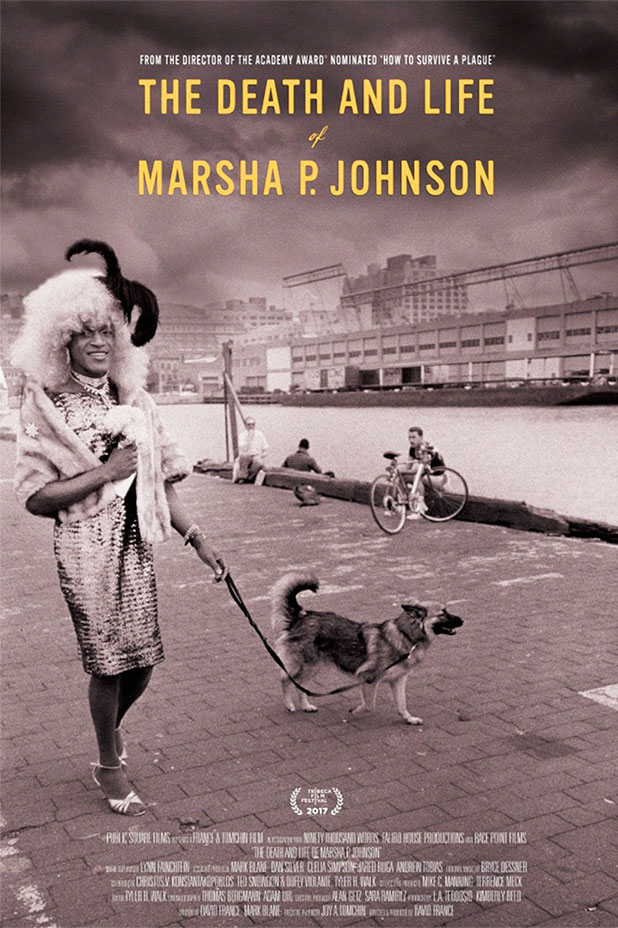
The Death and Life of Marsha P. Johnson

(USA 2017)

Marsha, Marsha, MARSHA! I’ll say this: David France’s new documentary has a lot going on in it. The center of the film, obviously, is legendary Greenwich Village “street queen” Marsha P. Johnson, a trans LGBT activist who hit the streets and stood at the front line when the fight was just about the “gay rights” movement. In the ’60s. Marsha, a figure at the Stonewall riots, founded Street Transvestites Action Revolutionaries, or S.T.A.R., with Sylvia Rivera in the early ’70s — 1970 to be exact. Her fight continued onto AIDS and transgender issues. She clearly was ahead of her time.

Sadly, Marsha ended up in the Hudson River in 1992, an apparent murder victim. It was almost 25 years to the date that I saw this film. The New York City Police Department called it a “suicide” — then called it a day. It remains an unsolved case.

The Death and Life of Marsha P. Johnson wants to honor Marsha, and it kind of does. At the very least, it sings her praises and puts her in a positive light. Ultimately, though, it fails. Told through the eyes of friend and surrogate Victoria Cruz, it unfortunately lets other things — mainly other people’s egos — get in the way. Part history and part true crime, Marsha’s story is watered down because French crams in more than what’s necessary to tell it, and he loses her in the process.

The Death and Life of Marsha P. Johnson succeeds in showing Marsha’s determination and influence. Perhaps unintentionally, it also shows a wonderfully colorful version of New York City in its cultural — or countercultural — prime, a place that simply doesn’t exist anymore. The hardest part of watching this film, though, is the attitude against trans people — even from gay men. It’s something you might not expect, but there it is.

From a historical or social standpoint, this is a winner. As far as Marsha is concerned, it could have been better. Still, it’s worth the time it takes to see it.

With Michael Baden, Frances Baugh, Pat Bumgardner, Jimmy Camicia, Eddie DeGrand, Matt Foreman, Jacques Garon, Chelsea Goodwin, Xena Grandichelli, Jennifer Louise Lopez, Agosto Machado, Marcus Maier, Ted Mcguire, Jean Michaels, Robert Michaels, Rusty Mae Moore, Candida Scott Piel, Coco Rodriguez, Kitty Rotolo, Vito Russo, Mark Segal, Beverly Tillery, Randy Wicker, Brian R. Wills, Sue Yacka

Production: Public Square Films, Faliro House Productions, Ninety Thousand Words, Race Point Films, Terasem Media & Films

Distribution: The Film Collaborative, Netflix

Screening introduced by David France and followed by a live Q and A with France, Mark Blane, and someone whose name I didn’t catch moderated by Alonso Duralde

105 minutes
Not rated

(Directors Guild of America) B-

Outfest Los Angeles LGBT Film Festival

https://www.netflix.com/title/80189623

Saturday Church

(USA 2017)

Ulysses (Luka Kain) is a quiet, delicate teen who lives in Queens and is just starting to figure out his sexual identity — it involves wearing panty hose under his jeans. When his father dies, he becomes the “man of the house.” Unfortunately, his mother (Margot Bingham), who works all the time, is already on edge because she caught him wearing her clothes. Ulysses shares a bedroom with his younger brother, Abe (Jaylin Fletcher), who knows that he’s still rummaging through mom’s closet on the sly and gives him shit for it. School is no respite because Ulysses’s classmates are jerks.

Enter stern Aunt Rose (Regina Taylor) to help at home while mom is away at work. She takes charge, usurping Ulysses and his mother as the master of the domain. She’s not about to have a dress-wearing freak around, so she pushes Ulysses toward the one cure she knows: the Lord.

Ulysses escapes to the Christopher Street Pier, where he meets a gang of “drag queens”: Ebony (MJ Rodriguez), Dijon (Indya Moore), and Heaven (Alexia Garcia). They take him to “Saturday Church,” a space in Greenwich Village where one night a week trans mother hen Joan (Kate Bornstein) offers a meal, a shower, clothes, perhaps a spot to vogue, and companionship to homeless LGBTQ kids. This is where Ulysses finds his groove.

Too bad mean Aunt Rose is waiting for him to come home.

Damon Cardasis’s first feature length film is a winning mix of Moonlight (https://moviebloke.com/2016/11/19/moonlight/ ), La La Land (https://moviebloke.com/2016/10/13/la-la-land/ ), and Tangerine (https://moviebloke.com/2015/07/28/tangerine/ ) with just the right splash of Paris is Burning (https://moviebloke.com/2016/08/26/paris-is-burning/ ). Saturday Church has some shortcomings, but the film oozes so much charm and warmth that I found it easy to forgive its flaws. Some of the songs and dance numbers are better than others — the song in the locker room and the other with Ulysses singing to his new boyfriend (Marquis Rodriguez) as they walk to the train stand out, especially when flower petals start falling. It’s really cool.

The acting is really good all around, but Kain is particularly awesome. He gives palpable tenderness and vulnerability to his character. The so called “drag queens” are not just fierce but downright touching. The way they save Ulysses is sweet. They make you long for a friend who has your back like they do. The story here totally sold me. I look forward to what’s next from Cardasis.

With Stephen Conrad Moore, Peter Y. Kim, Evander Duck Jr.

Production: Spring Pictures, Round Films

Distribution: Samuel Goldwyn Films

Screening introduced and followed by a live Q and A with Damen Cardasis

82 minutes
Not rated

(Directors Guild of America) B-

Outfest Los Angeles LGBT Film Festival

http://www.samuelgoldwynfilms.com/saturday-church/

Kevyn Aucoin Beauty & the Beast in Me

(USA 2017)

“He was way ahead of his time. Just the way we do now with selfies and Snapchat and Facebook — he would have put the little Instagram kids to shame!”

— Amber Valletta


“Kevyn’s biggest motivation to succeed was his abandonment issues. He had this thought that, if I work with you and you become my friend, and I make you pretty, then you won’t abandon me. I absolutely think he was looking for a mother figure in the people that he worked with.”

— Eric Sakas

Superstar makeup artist Kevyn Aucoin lived an enviable life. He was successful doing what he loved — his work was on runways, in music videos, on award shows, and on magazine covers, at one point nine consecutive issues of Vogue. He wrote books and started a line of cosmetics.

On top of that, he hung out with models, legends, and his own idols: Kate Moss, Cindy Crawford, Naomi Campbell, Linda Evangelista, Christy Turlington, Paulina Porizkova, Susan Sarandon, Gwyneth Paltrow, Winona Ryder, Liza Minnelli, Tina Turner, Whitney Houston, Janet Jackson, Madonna, Cher, and Jennifer Lopez to name a few. Some of them were actual friends (I can only imagine Liza leaving voicemail for me).

Judging from the fact that they all let Aucoin record him with them backstage — on videotape, and not always made up — they must have felt something for him. An affinity? Safety? A debt? Whatever it was, it endeared him. Even in his home videos, he made them look good.

So it’s odd and downright tragic that someone who brought so much beauty to the world, never felt beautiful himself. Perhaps it had to do with his birth mother, Nelda Mae Williams, giving him up for adoption, or all the bullying he got as a teenager. He didn’t like his physical features, which were exaggerated by a condition that went undiagnosed for most of his life: acromegaly, a tumour on the pituitary gland that keeps the brain secreting growth hormones. It’s a painful condition that causes headaches and joint pain, and it got Aucoin addicted to prescription drugs.

A trove of home videos found after his death in 2002 forms the basis for Lori Kaye’s documentary, Kevyn Aucoin Beauty & the Beast in Me. He recorded everything — the aforementioned videos with celebrities, with family members and boyfriends, and even when he was alone. Kaye interviews different people from Aucoin’s life to tell his story, and the interviews range from funny (Andie MacDowell) to sad (ex boyfriend Eric Sakas discusses Aucoin’s downward spiral) to eyeroll-inducing (Williams claims Aucoin would not have been gay had she raised him).

His adoptive parents, Isidore and Thelma Aucoin, accepted him and even dropped out of their church because of its stance on homosexuality. He moved to New York City, and the rest is history.

The celebrity interviews are fun, and some are gushy. Some of the interviewees even cry. They all provide insight into the kind of guy Aucoin was. What Kaye has that makes her documentary special, though, is Aucoin’s tapes, and she incorporates footage from them into the project in a way that lets him tell his own story. It’s an often amusing one with a sad undertone. It also serves, as Cindy Crawford points out, as a time capsule — a really good one. I confess, a few scenes gave me chills.

With Andie MacDowell, Cindy Crawford, Naomi Campbell, Paulina Porizkova, Gwyneth Paltrow, Amber Valletta, Isidore Aucoin, Nelda Mae Williams, Jed Root, Eric Sakas, Tina Turner, Cher, Liza Minnelli, Whitney Houston, Jennifer Lopez, Janet Jackson

Production: Putti Media

Distribution: Logo Documentary Films (USA), Dogwoof (International)

World Premiere

Screening introduced by director Lori Kaye

90 minutes
Not rated

(Directors Guild of America) B-

Outfest Los Angeles LGBT Film Festival

https://www.kevynaucoindocumentary.com

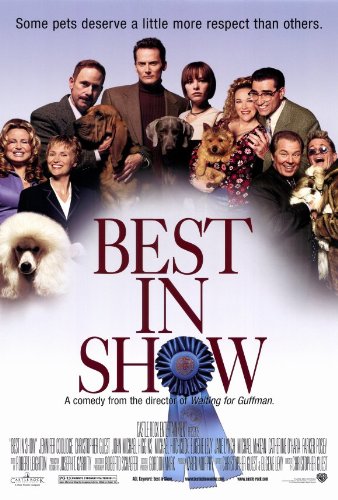
Best in Show

(USA 2000)

“We met at Starbucks. Not at the same Starbucks, but we saw each other at different Starbucks across the street from each other.”

— Meg Swan

I’m an enthusiastic fan of sharp, quirky humor; the more biting, the better. I love stuff like Monty Python, Kids in the Hall, Strangers with Candy, The Office, Little Britain, and of course Christopher Guest’s This is Spinal Tap, one of my favorite not to mention most quoted films.

Best in Show, another “mockumentary” like the ones Guest has become known for, is right up my alley. It pokes fun at a culture many no doubt find strange: dog shows. Woof!

Best in Show follows five canines and their owners as they prepare for and travel to a dog competition, the Mayflower Kennel Club Dog Show — that title is perfect! — in Philadelphia. The characters are awesome and the situations they get into are fun. The cast, which includes then-minor stars like Jane Lynch and Jennifer Coolidge who would go on to bigger things, is stellar. Guest and Eugene Levy’s screenplay is deliciously mean. This is all good.

Unfortunately, I didn’t love it. I saw Best in Show a long while back, but this time it just didn’t strike me as funny as I remember it. I don’t know what it was — I had a long week and I had to travel the next morning, so maybe that explains why I wasn’t feeling it. Maybe it was the martinis. One of these days, I’ll give Best in Show another chance to redeem itself.

With Fred Willard, Eugene Levy, Catherine O’Hara, Parker Posey, Jay Brazeau, John Michael Higgins, Michael McKean, Michael Hitchcock, Christopher Guest, Ed Begley Jr., Beatrice the Weimaraner, Winky the Norwich Terrier, Hubert the Bloodhound, Miss Agnes the Shih Tzu, Tyrone the Shih Tzu, Rhapsody in White the Standard Poodle

Production: Castle Rock Entertainment

Distribution: Warner Brothers

90 minutes
Rated PG-13

(iTunes rental) C-